Clean Energy Investing, Sustainable Architecture, Music Art Culture


Popular Posts

Search Alternative Energy Info; Green Power Investments Mutual Funds

Find ecologically sustainable green energy, clean power funds, alternative energy technology stocks, green investing news, manufacturers of photovoltaic solar electricity panels, renewable energy products, solar power investments, thin-film solar, green technology ETFs, wind turbine companies, geothermal stocks and much more!!!

Custom Search

Solar-Intelligence Blog; Conscious Living, Smart Investing

Best Green Stocks Investing Blog

Showing posts with label green power in India. Show all posts

Thursday, December 17, 2009

880BC to 830BC; A New Timeline of Ancient World History

By now Musa Akhenaten had moved from Egypt up to Palestine and was reigning as King Rehoboam. The ancient Two Kingdoms of Egypt and Ethiopia Kush were replicated in the New Holy Land as Israel and Judah. Most of the stories in the Old Testament are based on prototypes and archetypes from the Twelfth and Thirteenth dynasties, but the majority of characters and detailed stories are from the Eighteenth Dynasty. King David is a composite of four Egyptian Pharaohs, while Joseph and his brethren of many shades is based on Yuya. Akhenaten, the Sun King who brought monotheism to the Nile, contributes greatly to the second Moses (first Moses likely being Hammurabi) with his son the Boy-King Tutankhamen becoming the second Jeshua who paved the way brilliantly for the third, Aristobulus Jeshua son of Mariamne Boethus.

Over the previous century the first New Jerusalem experiment of moving the Temple Shrine (Holy of Holies) down the river from its historical place in Thebes / Karnak to what is now the elbow in the Nile called Tel Al Amarna, but in Bible Days this region was the scene of a spiritual rebirth of epic proportions and was known as Akhetaten, City of the Sun. By 850 BC a large second wave had left Egypt for the Land of Israel; the first exodus of this generation had been led by Yuya who was renamed Reuel in Palestine, while Akhenaten led an even larger group into the region and took over Jerusalem and the entire areas we would later know as Samaria and Galilee, and the region south through Bethlehem and down to Hebron, which was the welcoming centre for new arrivals. He was reigning as King Rehoboam, and just like had happened in Egypt, initial europhia waned over the months and the difficult environment meant that leadership was constantly being challenged, and Musa Amenhotep IV was now getting up in years.

In India the zero had been invented around 876BC, and though literacy was rising in many nations and the Greek alphabet was taking a form that would soon go international, numeracy was still the realm of magi and wizards. The Arabic numeral system together with the Hindu zero would revolutionize mathematics, laying a foundation for global science that is used unto this day. Within seventy years Indian mathematician Baudhayana's teachings and theory would signal a major leap forward for humanity and pre-date the works of Pythagoras by three centuries.

The Kingdom of Van Urartu rising in Armenia would become a spiritual foundation for the royal family for centuries, even supporting Kings from the families of Jesus in the first and second century and Mohammed in the seventh and eighth centuries, through the Prophets family ties to King Heraclius. Armenia was now becoming a buffer between the European / Middle earth sea nations (Greece, Rome, Egypt, Carthage, Gaul, Spain) and sometime enemies in Assyria to the south and Persia to the East. Armenians were considered even more neutral than Jews, and the nation was something of a Switzerland of the Roman and other eras. yes they were drawn into wars, but the learned to seek peacekeepers as leaders. King Ashoka and King Aristobulus had each come and gone, leaving a legacy of good government and prudent leadership, yet regression was everywhere and people were acting like Jesus had never been here! Ahhh, we are getting ahead of the story.

The nineteenth and twentieth dynasties and the stories of Ramses and of the Chosen are likely where we are headed next, n'est-ce pas?


Saturday, August 18, 2007

Forbes article on solar power in India and China

India's Powerful Dilemma

by Paul Maidment, Forbes.com


Over the past quarter of a century, India's energy consumption has tripled. The rate of growth is faster than China's, albeit from a lower base, though the causes are the same: rapid economic development, a large and growing population and increasing urbanization. So is the potential threat to air quality and water supplies.

Even under conservative estimates of growth, India's energy requirements are likely to increase by a further third in the second half of this decade, driven by industry, transportation and domestic electricity consumption as living standards rise. Yet India's ambition to grow its economy at a long-term annual rate of 8% is running up against an energy constraint.

Solving it will require continued reliance on fossil fuels--notably coal--greater energy imports and root-and-branch reform of electricity generation, which in India is an inadequate, insufficient and insolvent provision of power that is already causing environmental damage to water supplies.

India currently uses coal for about half of its energy needs. Few see that share changing much over the next two decades, even as overall energy use grows. The country risks creating the same environmental problems for itself that now confront China? (See "Pollution and Prosperity.")

India already has energy-related water shortages. The country's legions of small farmers are heavily subsidized to pump water for irrigation. This not only drains an unreliable and insufficient supply of rural power but also depletes water tables across the subcontinent. This creates a vicious cycle. Lower water tables require farmers to consume more energy to pump ever-deeper water supplies with ever larger pumps. This, in turn, puts more strain on power supplies and contributes to higher levels of greenhouse gases.

Electricity reform is central to both India's economic development and its environmental protection. India produces a lot of electricity, but 30% to 50% is lost along the delivery chain. Utilities that collectively lose $7 billion a year not only fail to deliver the power needed but are soaking up billions of rupees in bail-outs--money that could otherwise be spent on education and health services.

The government has been liberalizing the sector for the past 15 years, but progress is slow, despite the priority given to distribution reform. Thousands of villages are still off-grid, and power shortages in cities are common.

Power generation accounts for most of the coal consumed in India, with heavy industry a distant second. Most electricity is generated from pollution-generating, high-ash coal. The government is promoting a switch from coal-fired to natural-gas plants for power generation and cutting subsidies for low-quality coal--part of a general move to market pricing for energy and anti-pollution measures.

That is happening slowly, too. Replacing existing coal-fired plants is a capital-intensive and time-consuming process. Many of India's highly polluting, low-efficiency coal-fired power plants will stay in operation for years to come. The most feasible alternative, natural gas, has seen its share of India's energy consumption rise from 1.4% in 1980 to only 7% today.

While natural gas is at the heart of the government's policy for cleaner power generation and fertilizer production for the country's huge farm sector, India faces potential problems. Its natural gas imports come from Turkmenistan, Bangladesh, Iran, Miramar--all places that raise questions about the reliability of supply. India's own untapped natural gas fields lie under deep seas.

Renewables are not seen to be feasible on a commercial scale in the foreseeable future. India has one of the largest national programs to promote the use of solar energy, but unlike many developed countries that have turned to solar energy mainly out of concern about the environment and energy security, solar power in India is seen as a cost-effective way to provide energy to small villages and remote areas off the national grid where there is a shortage of electricity.

Nuclear power may by the long-term alternative to coal, but for now, there is little that will check the rapid growth of India's carbon emissions--rising faster than even China's. India has not made the same progress in energy efficiency as China. Its ability to wring economic growth out of each unit of energy it consumes has remained flat for two decades, whereas China has improved markedly.

A big reason is the lack of energy efficiency and conservation measures in most industries at the local level. Ever since the Bhopal disaster in 1984, India has had strong environment protections enshrined in law. However, their effectiveness diminishes due to a lack of enforcement that grows laxer the closer administration gets to the local level.

Thus, air pollution has become India's most severe environmental problem, and one that is likely to continue to worsen. India's per capita carbon emissions are relatively low, at 1.2 metric tons of carbon per person in 2003. (China's emissions were 3.2 metric tons per person, and the U.S.'s 19.8). But India's emissions are forecast to triple by 2020 due to the rapid pace of urbanization, increased use of cars and trucks and the continued use of older and more inefficient coal-fired plants for power generation.

As in China, continued urbanization has exacerbated the problem of rapid industrialization. Cities are frequently unable to implement adequate pollution control, and some India cities--including New Delhi, Mumbai, Chennai and Kolkata--are among the world's most polluted. Urban air quality ranks among the world's worst.

Also as in China, sheer population growth and urbanization make it all the more difficult to pull off the balancing trick of continuing to generate economic growth without destroying the quality of life in both the cities and villages. But unlike China, India has a strained power generation, transmission and distribution infrastructure that is already hampering growth.

For more info:

Alternative Energy Website

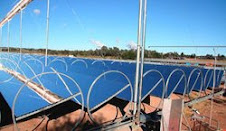
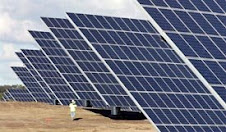
India ideal for solar power development

Solar Electricity in Asia - Photovoltaic Panels - Aleternative Energy

Solar Energy India

from clean-energy-ideas.com

The geographical location of India allows for long days of sunny weather for the majority of the year. This advantage allows solar energy in India to be a viable option for a means of generating electricity for a large proportion of the population.

Indias high population which is around 4x that of the United States' population means generating enough power can be quite a task.

The energy consumption in India is currently allot less than that of the United States, and this shows how a large proportion of Indias population does not have access to electricity. The use of solar energy in India could change this problem, and provide a clean, cheap source of electricity for many areas of India.

It is said that the geographical location of India means the country receives well over 4500 trillion kWh of pure solar energy each year, which is far beyond the annual power consumption for India, and even that of the United States who in 2004 used less than 4 trillion kWh of energy.

Solar energy has a huge potential for the population of India, yet the installation of solar energy systems still remains a high cost solution for many countries where fossil fuel energy provides most of the electricity needed.

As solar energy technologies become cheaper, we should start to see a huge shift towards the use of solar energy sources in many countries like India, and we are already seeing small scale installations of this nature.

The main con of solar energy which lies at the heart of the debate of proposed solar installations for many countries such as India is the cost, but as time goes by, manufacturing methods can become simpler therefore making the end product cheaper.'

India will take a huge advantage of the available solar energy supplied to the country in the future, and we can hope this will lead to an improved standard of living for much of the population.

Yuya Joe Blog

Lake Ontario Waterkeeper

The Daily Beast -Politics Blog

21stArch.com - 21st Century Architecture

Original Joe College Blog

WikiLeaks Foreign Policy Analysis

AGreenRealtor.com Real Estate Blog - Ecology Energy Efficiency

Best Green Stocks Investing Blog

JOIN Betfair through link below, you "Choose Your Bonus!"

PV Intell Photovoltaic Solar Stocks Investing

SEARCH Leading Alternative Energy and Ethical Investing websites

Custom Search

Daily Kos

Rare Earth Stocks Research

Patrick MacManus's Blog Peace and Collaborative Development

BeesTreesFrogsElephants.com - Nature and Ecology Blog

Research Green Energy stocks, Clean Energy investing information

Find wind power investing info online, clean energy mutual funds, geothermal stocks, solar energy investments.

Custom Search


Green Energy Investing Network:

Green Stocks Investing Clean Power Blog

SolarIntell.com Renewable Power Investing Website

Wind Intell.com Wind Energy Stocks Company Links

Geothermal Power Investing Public Companies

PV Intell.com Leading Photovoltaic Solar Energy Stocks