Clean Energy Investing, Sustainable Architecture, Music Art Culture


Popular Posts

Search Alternative Energy Info; Green Power Investments Mutual Funds

Find ecologically sustainable green energy, clean power funds, alternative energy technology stocks, green investing news, manufacturers of photovoltaic solar electricity panels, renewable energy products, solar power investments, thin-film solar, green technology ETFs, wind turbine companies, geothermal stocks and much more!!!

Custom Search

Solar-Intelligence Blog; Conscious Living, Smart Investing

Best Green Stocks Investing Blog

Showing posts with label solar energy in africa. Show all posts

Sunday, December 09, 2007

Wind from Atlantic and Sun from Africa and Middle East could power a cleaner Europe


North Africa Solar power generation project, European electricity

Now this is very positive. Last week there was talk of a giant ’supergrid’ connecting much of Europe to wind turbines across the continent, to take advantage of whenever the wind was blowing.

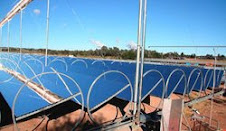
Now the Guardian reports on Desertec, the plans to put hundreds of solar concentrating plants on the North African coasts and in the Middle East. Two thirds of the estimated 100 Billion Watts would stay in the countries producing the energy, with another 30 Billion Watts (around of all of Europe’s use) being pumped via underwater cables to the EU, which would provide a chunk of the funding for the project. With the Bali talks now underway to find a new version of the Kyoto treaty, projects like this could be a major facet of reducing carbon emissions. German energy expert Gregor Czeich reckons with new higher efficiency power lines a 100% renewable powered Europe could be possible in the near future without costing much more than the current fossil fuel system.

article and posts responding to it are at:

North African Solar Power Project

Also check out:

Alternative Energy Investing Site


Bees Trees Frogs Elephants Blog


Renewable Power Stocks Websites

Tuesday, October 23, 2007

Solar Power to the People

yea, i wrote a song with that title a couple of decades back, and if i can find hte lyrics, i'll post them here

for now, here are the lyrics to the title track of my rock'n'reggae cd, Give U everything by Yuya

Give U Everything

Lyrics by Yuya Joseph and Music by Michael St. Clair


Back in the summer of twenty-o-five

We were fighting in the streets just 2 stay alive

U never knew what was coming next

Warfare and terror eatin’ brightest and best

People turning 2 religion 2 hide

From one another and all the reasons 2 cry

Nobody told me ‘bout the sun and the shade roles

I wanted your heart mind body and soul


I only wanted Everything

We were young and relentless

Our passions burned hot

I’m gonna give U everything

My story life world visions

Everything I’ve got!

I’m gonna give U everything

I’m gonna give U everything

I’m gonna give U everything

Gonna give U give U give U give U

Give U everything


‘Twas in the autumn of twenty-o-eight

Things were really looking up, Irie, jus feelin’ great

Two very long days since the birth of Iyasus

Cusp of a New Day, a Spirit a Muse

I couldn’t believe my good fortune 2 meet U

See your smiling face, hold your hands, and greet U

In Beijing and Addis and at home in Canada

We’re rockin the world from Athens 2 Asia!


I only wanted Everything

We were young and relentless

Our passions burned hot

I’m gonna give U everything

My story life world visions

Everything I’ve got!

I’m gonna give U everything

I’m gonna give U everything

I’m gonna give U everything

Gonna give U give U give U give U

Give U everything


Alternative Energy Investing Blog

Sunday, August 26, 2007

Incremental Infrastructure ... or time for total rebuild?

Incremental Infrastructure

Alex Steffen, www.worldchanging.com

Ethan has a terrific piece in the Boston Globe on his concept of incremental infrastructure:

[T]he idea is to build essential facilities -- telephone networks, power grids, roads -- in small pieces using private investment, instead of relying on large, centrally planned, government-run projects.The rise of mobile phone networks linking more than 100 million Africans across the continent and the blossoming of cybercafes from Cape Town to Dakar are evidence that incremental infrastructure is already transforming the continent. But Africa needs go beyond telephones and computers. Many nations lack roads, electric power, schools, hospitals, clean water. If the lessons learned from building telephone and Internet systems can be applied to other types of African infrastructure, African entrepreneurs could find themselves wiring villages, paving roads, and perhaps even building airports -- building the new Africa while turning a profit in the process.

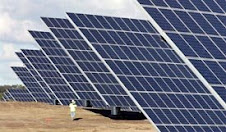
Conceptually, this idea is sort of the crossing of two themes we frequently discuss here, mixing the power of leapfrogging technologies with the transformational abilities of the better sort of microcredit programs. As such, it is immediately interesting, and offers obvious potential not only for development, but, with the proper tweaks, sustainable development. After all, there's no reason why infrastructure acquired in an incremental manner ought not to be green, efficient, sustainable (indeed, in some cases, like energy, the green alternatives already strongly out-compete the old polluting infrastructures, especially when they're being assembled in a distributed fashion -- think of solar energy in Africa, for instance).

But there are more tie-ins to worldchanging concepts here. Take remittances. These small amounts of money wired home by people working abroad are already the lifeblood of many developing world communities. There's no reason why they couldn't also become seed capital for needed bits of local incremental infrastructure, as Ethan argues elsewhere:

Governments and aid agencies might also be able to assist with incrementalist strategies by focusing on remittance. Remittances sometimes create infrastructure on a highly local level - a water pump or generator for a single family, generally. Mexican communities have been experimenting with matching programs that will contribute public dollars or aid dollars to community projects funded via remittance - a worker might choose to send $150 to his family and $50 to a community school fund, especially if he knew the $50 would be matched 3 to 1 to build a school for his children. Matching of remittance for incremental projects has a very different “feel” from taxing remittance - instead of supporting the entire government infrastructure, the monies collected (voluntarily, I’d suggest) are guaranteed to focus in the area a worker wants to see benefit. They’re broader than the familial benefits of traditional remittance, but smaller than the national benefits generated by taxing remittances.

Of course, there are other mechanisms for transferring money from North to South that might also serve to finance incremental infrastructure. The clean development mechanism could fund clean energy infrastructure (indeed, we wrote about an example of this just recently, the Bagepalli CDM Biogas Project), but we might also look to tie other global conservation goals that have local benefit more explicitly to opportunities for local sustainable development, whether we're talking building agricultural greenbelts to hold back advancing deserts, or creating a sustainable forestry industry in country like Bolivia.

We in the global North need the developing world to be an enthusiastic partner in planetary efforts to fight climate change, preserve biodiversity, maintain ecosystem services and reduce pollution. It is entirely unreasonable, though, for us to expect them to pick up the check for the costs involved, when the historic burden for at least a part of their poverty rests on our shoulders, and we are almost wholly responsible for the creation of the planetary environmental crises we now face. We've grown wealthy creating, or at least helping to create, these messes: now it's our job to finance their clean-up.

What we finance, though, is still entirely open to debate. Personally, I think the record of inter-governmental aid is not a very good one. I question the wisdom of having powerful people loan or give other powerful people huge sums of money to use on behalf of other less powerful people. I think it is almost always a better idea to try to get the money into the hands of the community that needs it.

So incremental infrastructure makes sense to me. I think there are still a ton of questions about how we do it, how we see that it actually benefits those we hope to see served, how the wealth it creates is shared and so on, but it also seems to me that we're beginning to see the emergence of powerful, distributed, leapfrogging ideas applied to the physical world, and (in a civilization in need of rapid redesign and rebuilding) that seems like a promising development indeed.

Acorn Factor invests in California's Local Power

Acorn Factor, Inc. ACFN today announced that it has acquired ten percent of Local Power (LPI), a California-based corporation formed recently by a pioneer in the restructuring of the $325 Billion US retail electricity market. Building upon its successful investment in Comverge, Inc. COMV, a pioneer in the demand response field, Acorn Factor will have the right, for 12 months from today, to purchase an additional 41 percent stake in LPI, bringing its potential total ownership position to 51 percent.

LPI provides consultation services and energy intelligence tools to enable cities to develop renewable electricity resources on a massive scale while utilizing the local utility's distribution infrastructure. LPI's founder, Paul Fenn, created Community Choice Aggregation (CCA), a revolutionary method by which cities can dramatically accelerate deployment of local green power infrastructure in order to diversify their electric power away from fossil fuel to renewable energy and achieve more stable, competitive rates for their communities. There are approximately 1 million consumers currently benefiting from low cost electricity delivered under CCA laws in two states. The two major markets, the Cape Light Compact and the Northeast Ohio Public Energy Council in Greater Cleveland, are widely considered to be the only exceptions to the failure of electricity deregulation in the US. In 2002, Fenn authored a CCA law in California, where San Francisco now leads a major movement among municipalities and counties to implement Community Choice.

LPI is building a recurring revenue business with its highly scalable energy service bureau model, assisting cities to adopt, implement and manage CCA networks. CCA offers numerous benefits - city governments become strategic investors in renewable power, local jobs are promoted, rates are stabilized, and the service is popular with environmentally conscious politicians and voters.

In June 2007, the San Francisco Board of Supervisors voted to approve the adoption of a CCA plan authored by Local Power and to proceed with an RFP for implementation bids supported by approximately $1.2 Billion in revenue bonds under the City's "H Bond Authority," which Fenn wrote in 2001. The adoption of CCA by San Francisco is a first by a major city and will implement the largest urban rollout of renewable power in the world - an initial 360 MW of local green power facilities and a 51% Renewable Portfolio Standard by 2017. LPI initially is expected to generate revenues from consulting fees for assisting cities in drafting and implementing CCA implementation plans. There are currently more than forty cities in California considering adopting CCA implementation plans.

Paul Fenn, CEO of Local Power, said, "My dream is that in the next ten years every major city in the USA has the opportunity to painlessly replace at least 50% of its fossil fuel consumption with green power technologies using the tools we have developed at Local Power. Acorn Factor is the logical partner for Local Power because of its success in pioneering demand aggregation at Comverge for peak shaving. Local Power is seeking to apply CCA laws and related mechanisms we have developed to aggregate demand and fund massive deployment of renewable generation and conservation technology." John A. Moore, CEO of Acorn Factor, said that, "Local Power is a terrific opportunity for Acorn Factor to build on its success in aggregating electricity demand and shaping markets at Comverge. Local Power intends to use the CCA laws to expand the use of demand response and go beyond into generation of renewable power through private/public partnerships with the cities. Cities consume 75% of all electricity so with the right tools they are perfectly positioned to lead the green energy revolution. Please visit my blog www.betthejockey.com to learn more about our thinking on Local Power."

About Local Power: Local Power (www.localpower.com) is a pioneer in the restructuring of electricity markets through its innovation of Community Choice Aggregation laws and related mechanisms that enable cities to leverage group buying power and develop renewable power resources on a massive scale while using the local utility's distribution infrastructure. LPI was founded and is directed by Paul Fenn, co-author of the nation's original Community Choice Aggregation law, and author of California's 2002 law, who has successfully worked with local and state governments since 1996 to introduce bills and laws which pioneer alternative power provider options. LPI views Community Choice Aggregation as the purchasing and financing methodology to capitalize on the opportunity of large-scale renewable energy and conservation technologies.

About Acorn Factor: Acorn Factor, Inc. is a holding company for emerging energy ventures which currently owns 2,786,021 shares of Comverge, Inc. COMV common stock - a leading provider of clean energy solutions that enhance grid reliability and enable electric utilities to increase available electric capacity. Acorn specializes in funding and accelerating the growth of emerging ventures that promise meaningful improvements in the economic and environmental efficiency of the energy sector. Acorn Factor also owns an interest in Paketeria GmbH and a controlling position in dsIT. Additional information about Acorn Factor, its dsIT subsidiary and its affiliates is available at www.acornfactor.com, www.dsit.co.il, www.comverge.com, www.localpower.com and www.Paketeria.de.

This press release includes forward-looking statements, which are subject to risks and uncertainties. The Company can provide no assurance that Community Choice Aggregation will be widely accepted, that Local Power will successfully develop its energy service bureau business to assist municipalities with the implementation of Community Choice Aggregation or that such business will generate revenues or profits. Actual results may vary from those projected or implied by such forward-looking statements. A complete discussion of risks and uncertainties which may affect the accuracy of these statements and the Company's business generally is included in "Risk Factors" in the Company's most recent Annual Report on Form 10-K as filed by the Company with the Securities and Exchange Commission. Contact Information: Bibicoff & Associates, Inc. Terri MacInnis, Dir. of Investor Relations 818-379-8500 terrimac@bibicoff.com

Saturday, August 18, 2007

Bill Clinton Foundation funds solar energy for 40 medical dispensaries in Tanzania

Clinton`s solar power for 40 dispensaries

By Guardian Reporter

Former US president Bill Clinton will fund solar energy projects in 40 dispensaries and health centres in Lindi and Mtwara regions.

Talking to President Jakaya Kikwete in Arusha yesterday, the former president said he had been satisfied by progress registered in projects undertaken by the Bill Clinton Foundation.

`I have decided to extend a similar project in 40 dispensaries and health centres in Lindi and Mtwara regions,` he said.

The Bill Clinton Foundation has already funded a solar energy project in three dispensaries and one health centre in Masasi District.

Implementation of the solar energy scheme follows a promise Clinton made to President Kikwete when the two met in New York in September last year.

The former US president also expressed his willingness to support the provision of social services in the country.

He mentioned other areas of interest as the fight against HIV/Aids and Malaria.

He promised to appeal to other development partners to support Tanzania.

For his part, President Kikwete commended Clinton for his commitment to Tanzanians, especially the needy.

`I personally, together with Tanzanians, value your contribution in the fight against malaria and HIV/Aids in this country. We also thank you for supporting community services,` said Kikwete.

The President said solar energy would improve provision of health services in rural areas.

The former US president arrived in the country on Sunday and launched an anti-malaria programme.

Clinton said the programme, which entails introducing cheaper malaria drugs, would start as a pilot project in Maswa and Kongwa districts.

The program is to be implemented jointly by Tanzania and the Clinton Foundation so as to ensure that the medicine is 95 percent cheaper.

Global Renewable Energy Fund to partner with many firms and countries

Between Energy, Telephony And Sustainable Devt

By Abimbola Akosile And Nseobong Okon-Ekong, Lagos

from www.allafrica.com

Despite encouraging prospects and robust records, energy efficiency technologies and renewable energy projects and businesses face significant difficulties in raising sufficient finance for investment. Indeed the problems are complex: mainly concerning lack of risk capital, which provides important collateral for lenders.

In emergent economies the need for risk capital is estimated at over -9 billion, far above existing levels. This shortfall largely accounts for why lenders are averse to financing even potentially viable commercial ventures.

Fortunately, aimed at the expansion of renewable energy, energy efficiency and other clean energy technologies, markets and services, the Global Energy Efficiency and Renewable Energy Fund (GEEREF) will enhance private sector access to risk capital through the patient capital mechanism because it offers various ways of risk sharing and co-funding in investment funds.

The GEEREF is a public-private investment fund focusing on developing countries and economies in transition. Set on making initial investments before the end of 2007, it will provide risk capital to investment funds specialised in advancing small and medium sized projects and companies in the renewable energy and energy efficiency sector.

GEEREF is expected to reach a first closing of around -140 million including -80 million of the European Commission (the Fund's promoting investor) and -24 million of the German Government. Italian (-8 million) and Norwegian Governments (-10 million) have shown strong interest and are expected to be among the group of initial investors.

Incidentally, fund management companies, financial institutions, project developers and individuals in the energy sector are invited to present their business plans.

The GEEREF can provide equity, or other applicable financing instruments with a typical investment horizon of between 10-15 years. Moreover, investments can be subordinated to other investors in the investment fund, as well as financially support the creation, operations and pipeline development of investment funds.

In as much as GEEREF will be active in Sub-Saharan Africa, East Asia and the Pacific, Non-EU Eastern Europe, Russia and Central Asia, Latin America and the Caribbean, the Middle East and North Africa, investments will be demand-driven with priority given to countries or regions with supportive energy efficiency and renewable energy policies that are conducive to private sector engagement.

Emphasis needs to be placed on deploying technologies with a proven technical record of accomplishment; such as small hydro projects, on-shore wind, geothermal, solar, biomass, biogas, modern cooking fuels and bio-fuels.

Energy efficiency projects will qualify in particular where similar financing barriers need to be resolved. Co-firing solutions, energy service companies and other small and medium scale energy efficient solutions will qualify.

Risk capital will be provided at affordable 'patient' terms whereby the degree of patience will reflect local and global benefits offered by the investment funds and their underlying projects. GEEREF's participation in an investment fund can range from between 25% to just below 50% for small and medium investment funds in underdeveloped markets with first-time management teams.

Participations in investment funds in more developed markets are more likely in a 5% - 15% range. In addition to investment capital, the fund can offer grants and seed capital to potential clients to support the creation, the operations and pipeline development in concert with improving or increasing the value of underlying assets of the investment funds.

This support is crucial to realise the full development potential of the GEEREF's investment objectives and for mitigating risks associated with investing in less advanced regions. Additional capital could be mobilised through the fund-in-fund structure including the project and SME level.

The fund also intends to recycle and reinvest the participations from public sector investors. The leverage of public funds could

be up to a factor of 10: considerably higher than for conventional grant-based schemes, which ask for 50-70% co-funding.

This innovative instrument could serve as a positive example to be replicated by other public and private investors. Once fully invested and leveraged, GEEREF could bring almost 1 Gigawatt of environmentally sound energy capacity to developing country markets. Annually, this could serve 1.25-1.75 million people with sustainable energy services, substituting 1-2 million tonnes of CO2 equivalents per annum.

The GEEREF will also broaden the range of instruments to effectively support the development and transfer of environmentally sound technologies between developed and emergent countries.

The benefits of an innovative investment tool such as the GEEREF exceeds the mere availability of risk capital at appropriate terms. Therefore, cooperation is sought amongst local fund managers and project developers, to create optimal conditions for each investment fund to serve the development of a vibrant and market-based local market for renewable energy and energy efficiency.

Development efforts (e.g. search for markets for their perishable goods) by indigenes could be aided by mobile phones, which need electricity to charge up.

Issues like this (including many others) limit the people's ability to achieve self-determination. Moreover, from March through December 2005, MTN Nigeria's subscriber base increased significantly from 5.6 to 8.4 million.

In the first quarter of 2006, Glo Mobile announced its subscription base had reached 5 million, two years after it began operations. Celtel (formerly Econet, and Vmobile) said at the end of 2005 it had approximately three million subscribers; current figures estimated at over four million.

Figures above are from 2005 and 2006. Presently, the assessment is that between MTN, Glo Mobile and Celtel, alone, GSM subscribers in Nigeria exceed 25 million and is growing.

Solar technology is tested and proven. Still, it is sad to note that though the African continent receives significant radiant energy, solar is not commanding enough support through research, development and implementation.

In Europe, solar electricity is nearly five times as expensive as conventional electricity but grid-connected PV is gaining cost/benefit advantages through integration into buildings and other designs.

If solar is to make significant contributions towards socio-economic and environmental sustainability in Nigeria, green tariffs and green electricity accessible to everyone including a fair price to groups generating solar electricity should be explored.

Adopting a centrally funded energy-efficiency programme with subsidies for renewable energy sources can encourage the citizenry to do more with less. The time to act is now.

- Additional vital information provided by Mr. Melford Ita, a Lagos based energy consultan.


--------------------------------------------------------------------------------
Copyright © 2007 This Day. All rights reserved. Distributed by AllAfrica Global Media (allAfrica.com).

View also:

Clean Energy Investing Website

Yuya Joe Blog

Lake Ontario Waterkeeper

The Daily Beast -Politics Blog

21stArch.com - 21st Century Architecture

Original Joe College Blog

WikiLeaks Foreign Policy Analysis

AGreenRealtor.com Real Estate Blog - Ecology Energy Efficiency

Best Green Stocks Investing Blog

JOIN Betfair through link below, you "Choose Your Bonus!"

PV Intell Photovoltaic Solar Stocks Investing

SEARCH Leading Alternative Energy and Ethical Investing websites

Custom Search

Daily Kos

Rare Earth Stocks Research

Patrick MacManus's Blog Peace and Collaborative Development

BeesTreesFrogsElephants.com - Nature and Ecology Blog

Research Green Energy stocks, Clean Energy investing information

Find wind power investing info online, clean energy mutual funds, geothermal stocks, solar energy investments.

Custom Search


Green Energy Investing Network:

Green Stocks Investing Clean Power Blog

SolarIntell.com Renewable Power Investing Website

Wind Intell.com Wind Energy Stocks Company Links

Geothermal Power Investing Public Companies

PV Intell.com Leading Photovoltaic Solar Energy Stocks