Local Solar Project Adds to Santa Clara’s Green Power Program
Santa Clara, Calif. – November 9, 2005 – Silicon Valley Power (SVP), the City of Santa Clara’s municipal electric utility, announces a new solar project, which will provide a portion of the solar power supply for Santa Clara Green Power, SVP’s renewable energy program. This new installation coincides with Santa Clara Green Power’s one-year anniversary and will contribute to the clean, pollution-free energy supported by program participants.
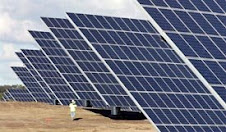
Rooftop solar panels, directly connected to the Santa Clara power system, have been installed at STG Machine, an industrial machinery company, by Borrego Solar Systems. The 224 solar panels are manufactured by Sharp and represent Santa Clara’s first business-owned installation supplying Santa Clara Green Power.
Since the program’s launch, Santa Clara Green Power has reached an impressive 4.35% participation rate with more than 2,100 customers enrolled–far exceeding the national average of 1.2%. SVP’s efforts demonstrate to utilities across the country that renewable energy is viable and attractive to consumers.
“There’s no better way to celebrate Santa Clara Green Power’s first anniversary than with the addition of a new solar project right here in Santa Clara,” said Junona Jonas, Utility Director at Silicon Valley Power. “It shows the impact that individuals can have in creating real change in our energy production.”
The new solar system will produce 55,600 kilowatt-hours per year, enough to power nine average Santa Clara homes, and will prevent 55,600 pounds of carbon dioxide from entering into the atmosphere each year–the environmental equivalent of taking about five cars off the road or planting more than 3,700 trees each year.
Through enrollment in Santa Clara Green Power, residents and businesses purchase 100% renewable energy credits from wind and solar energy for their monthly usage for an additional 1.5¢/kWh. A portion of the premium helps to finance new solar installations within the Santa Clara community.
Santa Clara utility customers can enroll in Santa Clara Green Power at www.siliconvalleypower.com; by sending an email with your name, address, account number and phone number to green@siliconvalleypower.com; or by calling (408) 244-SAVE (7283).
Silicon Valley Power
Silicon Valley Power is the trademark adopted for use by the century-old Electric Department of the City of Santa Clara, California. Silicon Valley Power provides power for more than 50,000 customers, including Intel, Applied Materials and National Semiconductor. It also is an active participant in the wholesale energy markets in the Western U.S. Visit www.siliconvalleypower.com for more information.
3 Phases Energy Services
Founded in 1994, 3 Phases Energy is a national renewable energy marketing and development company providing green pricing support services for utilities, retail and wholesale sales of Green Certificates, onsite solar photovoltaic and efficiency installation services and renewable electricity direct access services. It supports SVP in its green power offering. Visit www.3phases.com for more information.
Thursday, July 12, 2007


Wednesday, July 11, 2007
YoureWorthIt.org helps women in Central Africa
For the full website of YoureWorthIt.org, please visit this WORTH: Women's Organization of Rebirth Through Healing link!
The Women's Organization of Rebirth Through Healing's (W.O.R.T.H.) mission is to help women and children who are victims of rape in the Democratic Republic of The Congo to obtain proper medical care for both their physical and emotional wounds. W.O.R.T.H. is dedicated to the enhancement of the emotional well-being and self resiliency of the many that have suffered and are continuing to suffer in the Congo. It is the goal of W.O.R.T.H to provide assistance that will offer these women and children hope and allow them to transition into a better life.
ABOUT W.O.R.T.H.
The Women's Organization of Rebirth Through Healing is a nonprofit organization in the process of earning 501(c)(3) Status. W.O.R.T.H. recognizes the dire need to address human rights violations against women and children in Central and Eastern Africa, predominantly The Democratic Republic of the Congo. Our organization seeks to address and raise international awareness surrounding issues such as personal safety, sexual violence, displacement, access to health care, food and shelter, detention, and gender discrimination.
W.O.R.T.H. was established in 2006 as a passionate vision of hope by founder, Aria Maddox. In doing her own research into the violent rape crimes in Central Africa, Aria was shocked to find that very few organizations around the world were set up to directly help these women and children in the Congo. Even more appalling is the fact that the international community as a whole is paying little to no attention to the millions who have already lost their lives to the Congo war and the hundreds of thousands of others who are currently displaced and living in refugee camps. At these camps, they are without access to proper medical attention, adequate food and water, and shelter from the intense heat and torrential downpours; rains so devastating that they often completely wipe out the only roadways that lead to these camps, preventing clean water, food and medical supplies from reaching those who need it most. Aria’s vision for the Women's Organization of Rebirth Through Healing is to raise awareness, raise funds and eventually build a holistic transition house in the Congo that will serve to keep women and children safe while working to empower them in every aspect of their lives.
To help realize this ambitious goal and help bring her vision to life, Aria Maddox called on friend and philanthropist, Joy Plaza who she knew shared the same passion and dedication for social justice and human rights. Their shared commitment to this fight is the backbone of what lies ahead in W.O.R.T.H.'s future. But they do not stand alone. They stand alongside a group of strong and dedicated women and are also blessed with the voices of countless others who have stepped up and said the four simple words necessary to create change "How can I help?"
The Women's Organization of Rebirth Through Healing is poised to, not only reach the hearts and minds of those wanting to join our fight, but to put pressure on world leaders to take a stand against sexual violence as a weapon of war. It is a necessity that the G8 leaders and the United Nations play an integral role in intervening and putting an end to human right violations in the Congo as well as other war torn countries. One of our missions, with your help and through partnerships with other organizations who share our vision of hope, is to put pressure on world leaders and the international community to step up and fight for humanity.
The Women's Organization of Rebirth Through Healing's (W.O.R.T.H.) mission is to help women and children who are victims of rape in the Democratic Republic of The Congo to obtain proper medical care for both their physical and emotional wounds. W.O.R.T.H. is dedicated to the enhancement of the emotional well-being and self resiliency of the many that have suffered and are continuing to suffer in the Congo. It is the goal of W.O.R.T.H to provide assistance that will offer these women and children hope and allow them to transition into a better life.
ABOUT W.O.R.T.H.
The Women's Organization of Rebirth Through Healing is a nonprofit organization in the process of earning 501(c)(3) Status. W.O.R.T.H. recognizes the dire need to address human rights violations against women and children in Central and Eastern Africa, predominantly The Democratic Republic of the Congo. Our organization seeks to address and raise international awareness surrounding issues such as personal safety, sexual violence, displacement, access to health care, food and shelter, detention, and gender discrimination.
W.O.R.T.H. was established in 2006 as a passionate vision of hope by founder, Aria Maddox. In doing her own research into the violent rape crimes in Central Africa, Aria was shocked to find that very few organizations around the world were set up to directly help these women and children in the Congo. Even more appalling is the fact that the international community as a whole is paying little to no attention to the millions who have already lost their lives to the Congo war and the hundreds of thousands of others who are currently displaced and living in refugee camps. At these camps, they are without access to proper medical attention, adequate food and water, and shelter from the intense heat and torrential downpours; rains so devastating that they often completely wipe out the only roadways that lead to these camps, preventing clean water, food and medical supplies from reaching those who need it most. Aria’s vision for the Women's Organization of Rebirth Through Healing is to raise awareness, raise funds and eventually build a holistic transition house in the Congo that will serve to keep women and children safe while working to empower them in every aspect of their lives.
To help realize this ambitious goal and help bring her vision to life, Aria Maddox called on friend and philanthropist, Joy Plaza who she knew shared the same passion and dedication for social justice and human rights. Their shared commitment to this fight is the backbone of what lies ahead in W.O.R.T.H.'s future. But they do not stand alone. They stand alongside a group of strong and dedicated women and are also blessed with the voices of countless others who have stepped up and said the four simple words necessary to create change "How can I help?"
The Women's Organization of Rebirth Through Healing is poised to, not only reach the hearts and minds of those wanting to join our fight, but to put pressure on world leaders to take a stand against sexual violence as a weapon of war. It is a necessity that the G8 leaders and the United Nations play an integral role in intervening and putting an end to human right violations in the Congo as well as other war torn countries. One of our missions, with your help and through partnerships with other organizations who share our vision of hope, is to put pressure on world leaders and the international community to step up and fight for humanity.
Solar Cookers provide dignity and sustenance in Darfur refugee camp
Story from Wikia.com, full URL:
http://solarcooking.wikia.com/wiki/Touloum_refugee_camp
The Touloum refugee camp houses more than 20,000 Darfur refugees, mainly women and children. The area is devoid of vegetation, yet there is abundant sun with rainfall of between 3” and 5” (7.5 - 12.5 cm) yearly.
After setting up a large solar cooking project in the Iridimi refugee camp in Chad for Darfur refugees, the KoZon Foundation and Jewish World Watch began construction of a manufacturing plant and store room in the Touloum refugee camp in March of 2007 with a scheduled completion date of May 2007. Solar cooker training is scheduled to begin in Touloum in June of 2007.
The benefits of solar cooking for the refugees in this camp:
Solar cooking can reduce the need for frequent firewood collection reducing the risk of violence towards women and girls.
Two solar cookers can save one ton of wood each year.
There is no need to tend a fire so women are free to do other tasks.
The production of the solar cookers provides income generation opportunities for female refugees.
What you can do:
Help us provide the Iridimi and Touloum camps with solar cookers by raising awareness and raising money.
Host an event with an engaging Jewish World Watch speaker at your home, work, Parent Association, library, synagogue or church to learn more about the genocide in Darfur.
Organize a fundraiser to help bring solar cookers to these women. Ideas: BBQ, bake sale, car wash, dinner or theatre party.
Make a donation: A $30 donation supports one family by providing two solar cookers, training and two pot holders. A $150 donation supports five families by providing ten solar cookers, training and ten pot holders and so on.
http://solarcooking.wikia.com/wiki/Touloum_refugee_camp
The Touloum refugee camp houses more than 20,000 Darfur refugees, mainly women and children. The area is devoid of vegetation, yet there is abundant sun with rainfall of between 3” and 5” (7.5 - 12.5 cm) yearly.
After setting up a large solar cooking project in the Iridimi refugee camp in Chad for Darfur refugees, the KoZon Foundation and Jewish World Watch began construction of a manufacturing plant and store room in the Touloum refugee camp in March of 2007 with a scheduled completion date of May 2007. Solar cooker training is scheduled to begin in Touloum in June of 2007.
The benefits of solar cooking for the refugees in this camp:
Solar cooking can reduce the need for frequent firewood collection reducing the risk of violence towards women and girls.
Two solar cookers can save one ton of wood each year.
There is no need to tend a fire so women are free to do other tasks.
The production of the solar cookers provides income generation opportunities for female refugees.
What you can do:
Help us provide the Iridimi and Touloum camps with solar cookers by raising awareness and raising money.
Host an event with an engaging Jewish World Watch speaker at your home, work, Parent Association, library, synagogue or church to learn more about the genocide in Darfur.
Organize a fundraiser to help bring solar cookers to these women. Ideas: BBQ, bake sale, car wash, dinner or theatre party.
Make a donation: A $30 donation supports one family by providing two solar cookers, training and two pot holders. A $150 donation supports five families by providing ten solar cookers, training and ten pot holders and so on.
Calvert Alternative Energy Fund accesses the future
CGAEX Vows To Bring New Opportunities
Written by Subhasis Chatterjee, WallStreetActivist.com
It has come to the knowledge that the Premiere funding organization Calvert Socially Responsible Investing has launched the Calvert Global Alternative Energy Fund or the CGAEX in the recent days with the sole intention of providing its prime investors with the prospect of helping to take the edge off climate change at the time when they prefer to investment, regarded by many close quarters as a rapidly increasing sector which is comprised of a great deal of financial potential for a bright and stable future.
But what has been the essence of the Calvert Global Alternative Energy Fund? From a close discussion and a series of interviews with the topmost echelon of the organization it is revealed that the Calvert Global Alternative Energy Fund chiefly relies and does invest in the devices that are regarded as the viable providers of alternative energy that include solar, wind, geothermal, biofuel, hydrogen, and biomass. To be very precise, these are definite technologies that are not only renowned but also make these sources possible so as to be tapped, and the services or technologies that conserve or enable more efficient use of energy. The concerned officials speaking on behalf of the Company has confirmed that the Fund shall be utilized in the best manner to invest no less than a lion' share or 80% of its net assets in the companies that comprised both the U.S. and non-U.S. it is also to be noted in this respect that these are the prime companies whose main business happens to be the alternative energy or to denote in a better manner, which are involved in a noteworthy approach in the alternative energy sector.
No doubt, that the readers or the viewers of the present age are quite apt and happen to be thoroughly conscious about the latest happenings or the modifications in the Industrial and Business climate in the international arena. But to any sensible person a question occurs about the basic reason behind these recent developments. It is however learnt, that with the rapidly changing political and business climate in the international context the oil prices are getting higher and along with the immense growth of the international demand or aspiration for energy the conventional carbon-based energy resources are getting strained by and large. On the contrary, with the innovative methodologies and successful discoveries, the saga of the need and gradual emergence of the alternative energy has caught the attention of the public, media, and political attention as a potential solution to the pressing issue of climate change vehemently.
Written by Subhasis Chatterjee, WallStreetActivist.com
It has come to the knowledge that the Premiere funding organization Calvert Socially Responsible Investing has launched the Calvert Global Alternative Energy Fund or the CGAEX in the recent days with the sole intention of providing its prime investors with the prospect of helping to take the edge off climate change at the time when they prefer to investment, regarded by many close quarters as a rapidly increasing sector which is comprised of a great deal of financial potential for a bright and stable future.
But what has been the essence of the Calvert Global Alternative Energy Fund? From a close discussion and a series of interviews with the topmost echelon of the organization it is revealed that the Calvert Global Alternative Energy Fund chiefly relies and does invest in the devices that are regarded as the viable providers of alternative energy that include solar, wind, geothermal, biofuel, hydrogen, and biomass. To be very precise, these are definite technologies that are not only renowned but also make these sources possible so as to be tapped, and the services or technologies that conserve or enable more efficient use of energy. The concerned officials speaking on behalf of the Company has confirmed that the Fund shall be utilized in the best manner to invest no less than a lion' share or 80% of its net assets in the companies that comprised both the U.S. and non-U.S. it is also to be noted in this respect that these are the prime companies whose main business happens to be the alternative energy or to denote in a better manner, which are involved in a noteworthy approach in the alternative energy sector.
No doubt, that the readers or the viewers of the present age are quite apt and happen to be thoroughly conscious about the latest happenings or the modifications in the Industrial and Business climate in the international arena. But to any sensible person a question occurs about the basic reason behind these recent developments. It is however learnt, that with the rapidly changing political and business climate in the international context the oil prices are getting higher and along with the immense growth of the international demand or aspiration for energy the conventional carbon-based energy resources are getting strained by and large. On the contrary, with the innovative methodologies and successful discoveries, the saga of the need and gradual emergence of the alternative energy has caught the attention of the public, media, and political attention as a potential solution to the pressing issue of climate change vehemently.
Clean Power investing driven by new mutual funds
Alternative Energy Revolution Fueled by New Fund Launches Despite Sector Downturn
by Bill Baue, SocialFunds.com
The launch of the Guinness Atkinson Alternative Energy Fund testifies to optimism about the sub-sector echoed by the launch of the first renewable energy hedge fund by Ardsley Partners.
SocialFunds.com -- Even as alternative energy stocks are on a three-month downward slide, alternative energy investing continues to gain momentum with the launch of new funds, such as the Guinness Atkinson Alternative Energy Fund (ticker: GAAEX) that debuted on March 31. Ironically, the fund's benchmark--the WilderHill Clean Energy Index (ECO)--had been on fire since its August 16, 2004 inception at $126.59 until May 8, when it had doubled to $254.40. Since then ECO has been on downward slide to bottom out at $176.17 this Monday--and the Guinness Atkinson fund is down 10.80 percent from inception through July 31. However, the index has been creeping back and closed at $188.44 yesterday.
Interestingly, portfolio manager Tim Guinness has been running funds in the energy space since 1998 and therefore kept a left eye on alternative energy stocks, but tended not to invest in the emerging sub-sector as there was much better value available in conventional energy companies.
"We missed the 80 percent bounce in alternative energy from depressed levels in 2003 and 2004 but didn't worry overmuch as our conventional energy stocks were up 85 percent over the same period," Mr. Guinness told SocialFunds.com.
Size was also a constraint--its main energy funds maintain a $1 billion market capitalization threshold.
"This excluded most of the companies in the alternative energy space, and yet we could see that there was significant potential in many of these smaller stocks," says Mr. Guinness. "With oil at more than $50 a barrel and dwindling fossil fuel resources, we know that there will have to be a shift towards alternative energy sources."
"The prospects of many alternative energy companies are transformed if oil settles at $85 a barrel and we have begun to see that as an increasingly likely scenario," he adds. "We decided therefore that we should offer a fund that could practically invest in alternative energy stocks and enable our investors to have a way to potentially benefit from the improved economics of and structural shift towards these companies that will result if this happens."
Guinness Atkinson has lowered its market cap threshold to $50 million for companies in its alternative energy fund. It also takes a pure play approach to screening its universe.
"Stocks must have more than 50 percent of their revenue from businesses that are related to alternative energy sources," says Mr. Guinness. "We note that other funds in the space also have investments in several larger companies where a much smaller percentage of revenues is derived from alternative energy."
"The effect of this is to reduce the downside risk, but also to cap the potential upside," he points out.
Guinness Atkinson reduces risk by diversifying it across a portfolio of 40 to 60 US and international holdings. This international exposure differentiates it from its benchmark, as ECO is comprised of US companies. The top five holdings of the fund are Germany-based wind turbine producer Nordex (NRDXF.PK), Australian Ethanol (ASTUF.PK), and UK-based Clipper Windpower (CWP.L), ethanol producer Renova Energy (RVA.L), and fuel cell company Ceres Power Holdings (CWR.L).
Interestingly, US-based Evergreen Solar (ESLR) fell off the top ten holdings list (from position four as of June 30), as the company's share price has nearly halved from $16.00 on April 19 to a low of $8.22 this Monday. This timing may not be a coincidence.
"The recent downturn in alternative energy stocks is related to a number of factors--principally, the Nasdaq Index has fallen by 12 percent since April 19," Mr. Guinness says. "The sector is still in its infancy, so a number of the companies are technology companies with products at early stages in the lifecycle, and so they have been negatively impacted by the market move.
"Prior to the correction, as oil moved above $70 there was a marked increase in general enthusiasm for investing in the sector and valuations moved up to high levels with the stocks as money flowed in, but we now feel that much of this hype has been deflated," he continues. "To address this, we maintained a cash balance as the market declined, and have increased our holdings in stocks that we believe have seen an overreaction--we think that this downtown is providing us with a number of opportunities to get into stocks at attractive valuations."
The downturn has not overly dampened the enthusiasm for other forms of alternative energy investing as well. For example, the Ardsley Partners Renewable Energy Fund launched in early July as one of the first hedge fund focusing exclusively on alternative energy companies (both public and private). As with Guinness Atkinson, Ardsley Partners is not dipping its toes into the sub-sector for the very first time--it has been incrementally building a renewable energy position in its flagship fund for the past two years to the point that it now represents 15 to 17 percent of that fund.
While Ardsley is now one of the larger public equity players in alternative energy, the space is driven even more aggressively by private equity. More than $360 million of private equity and venture capital has filtered into clean energy companies this summer alone, according to statistics from VCDeal.com. Just yesterday, for example, biodiesel company Renewable Energy Group announced a $100 million deal.
"The alternative energy revolution has only just begun," states Mr. Guinness in the March 2006 special report on the sector.
©2007 SRI World Group, Inc. All Rights Reserved.
Order reprints | Send it to a friend | Print it | Save it
by Bill Baue, SocialFunds.com
The launch of the Guinness Atkinson Alternative Energy Fund testifies to optimism about the sub-sector echoed by the launch of the first renewable energy hedge fund by Ardsley Partners.
SocialFunds.com -- Even as alternative energy stocks are on a three-month downward slide, alternative energy investing continues to gain momentum with the launch of new funds, such as the Guinness Atkinson Alternative Energy Fund (ticker: GAAEX) that debuted on March 31. Ironically, the fund's benchmark--the WilderHill Clean Energy Index (ECO)--had been on fire since its August 16, 2004 inception at $126.59 until May 8, when it had doubled to $254.40. Since then ECO has been on downward slide to bottom out at $176.17 this Monday--and the Guinness Atkinson fund is down 10.80 percent from inception through July 31. However, the index has been creeping back and closed at $188.44 yesterday.
Interestingly, portfolio manager Tim Guinness has been running funds in the energy space since 1998 and therefore kept a left eye on alternative energy stocks, but tended not to invest in the emerging sub-sector as there was much better value available in conventional energy companies.
"We missed the 80 percent bounce in alternative energy from depressed levels in 2003 and 2004 but didn't worry overmuch as our conventional energy stocks were up 85 percent over the same period," Mr. Guinness told SocialFunds.com.
Size was also a constraint--its main energy funds maintain a $1 billion market capitalization threshold.
"This excluded most of the companies in the alternative energy space, and yet we could see that there was significant potential in many of these smaller stocks," says Mr. Guinness. "With oil at more than $50 a barrel and dwindling fossil fuel resources, we know that there will have to be a shift towards alternative energy sources."
"The prospects of many alternative energy companies are transformed if oil settles at $85 a barrel and we have begun to see that as an increasingly likely scenario," he adds. "We decided therefore that we should offer a fund that could practically invest in alternative energy stocks and enable our investors to have a way to potentially benefit from the improved economics of and structural shift towards these companies that will result if this happens."
Guinness Atkinson has lowered its market cap threshold to $50 million for companies in its alternative energy fund. It also takes a pure play approach to screening its universe.
"Stocks must have more than 50 percent of their revenue from businesses that are related to alternative energy sources," says Mr. Guinness. "We note that other funds in the space also have investments in several larger companies where a much smaller percentage of revenues is derived from alternative energy."
"The effect of this is to reduce the downside risk, but also to cap the potential upside," he points out.
Guinness Atkinson reduces risk by diversifying it across a portfolio of 40 to 60 US and international holdings. This international exposure differentiates it from its benchmark, as ECO is comprised of US companies. The top five holdings of the fund are Germany-based wind turbine producer Nordex (NRDXF.PK), Australian Ethanol (ASTUF.PK), and UK-based Clipper Windpower (CWP.L), ethanol producer Renova Energy (RVA.L), and fuel cell company Ceres Power Holdings (CWR.L).
Interestingly, US-based Evergreen Solar (ESLR) fell off the top ten holdings list (from position four as of June 30), as the company's share price has nearly halved from $16.00 on April 19 to a low of $8.22 this Monday. This timing may not be a coincidence.
"The recent downturn in alternative energy stocks is related to a number of factors--principally, the Nasdaq Index has fallen by 12 percent since April 19," Mr. Guinness says. "The sector is still in its infancy, so a number of the companies are technology companies with products at early stages in the lifecycle, and so they have been negatively impacted by the market move.
"Prior to the correction, as oil moved above $70 there was a marked increase in general enthusiasm for investing in the sector and valuations moved up to high levels with the stocks as money flowed in, but we now feel that much of this hype has been deflated," he continues. "To address this, we maintained a cash balance as the market declined, and have increased our holdings in stocks that we believe have seen an overreaction--we think that this downtown is providing us with a number of opportunities to get into stocks at attractive valuations."
The downturn has not overly dampened the enthusiasm for other forms of alternative energy investing as well. For example, the Ardsley Partners Renewable Energy Fund launched in early July as one of the first hedge fund focusing exclusively on alternative energy companies (both public and private). As with Guinness Atkinson, Ardsley Partners is not dipping its toes into the sub-sector for the very first time--it has been incrementally building a renewable energy position in its flagship fund for the past two years to the point that it now represents 15 to 17 percent of that fund.
While Ardsley is now one of the larger public equity players in alternative energy, the space is driven even more aggressively by private equity. More than $360 million of private equity and venture capital has filtered into clean energy companies this summer alone, according to statistics from VCDeal.com. Just yesterday, for example, biodiesel company Renewable Energy Group announced a $100 million deal.
"The alternative energy revolution has only just begun," states Mr. Guinness in the March 2006 special report on the sector.
©2007 SRI World Group, Inc. All Rights Reserved.
Order reprints | Send it to a friend | Print it | Save it
80 Megawatt Solar Electricity Farm slated for California
World’s biggest solar farm planned in California
Bernie Woodall, July 6, 2007 (Reuters)
posted to NewEnergyNews.com
WHO
Cleantech America LLC, Bill Barnes, CEO
WHAT
Cleantech America is behind Kings River Conservation District Community Choice Solar Farm, a 640 acre, 80-megawatt solar energy project, 7 times as large as the world’s biggest installation and twice as big as the biggest planned farm.
WHEN
The solar farm in scheduled to be completed in 2011.
Cleantech America is 2 years old.
WHERE
- Cleantech America is based in San Francisco.
- The installation will be in the San Joaquin Valley near Fresno, CA.
- Cleantech expects California, with this project, to displace Germany as the world “hub” in solar.
it doesn't get any better for solar than California (click to enlarge)
WHY
- Presently both the world’s biggest solar installation and the world’s biggest planned solar installation are in Germany. Fresno will be 17 times the size of the biggest US installation.
- Servicing 21,000 homes in Kings River Conservation District, 12 cities/2 counties in California's Central Valley.
- Cost not announced. Remaining: acreage purchase, transmission line hookup, panel manufacture contract.
- The Community Choice farm requires only approval by the California Energy Commission as a non-emitting self-generator project and local permits.
This is Cleantech’s 2nd announced project. 1st: 40 acres, 5 megawatts, near San Joaquin Valley’s Mendota, California. There will be more, also in the 80 megawatt size range.
- Cleantech partner: California Construction Authority
QUOTES
Barnes: "We're pretty confident that solar farms on this scale are going to have an industry-changing impact…We think it's the wave of the future. This scale of project, I think, creates a tipping point for renewable energy…We think the impact for it will be similar to the impact of the computer chip…So too will economies of scale like the Community Choice farm drive down the cost of solar…"
Bernie Woodall, July 6, 2007 (Reuters)
posted to NewEnergyNews.com
WHO
Cleantech America LLC, Bill Barnes, CEO
WHAT
Cleantech America is behind Kings River Conservation District Community Choice Solar Farm, a 640 acre, 80-megawatt solar energy project, 7 times as large as the world’s biggest installation and twice as big as the biggest planned farm.
WHEN
The solar farm in scheduled to be completed in 2011.
Cleantech America is 2 years old.
WHERE
- Cleantech America is based in San Francisco.
- The installation will be in the San Joaquin Valley near Fresno, CA.
- Cleantech expects California, with this project, to displace Germany as the world “hub” in solar.
it doesn't get any better for solar than California (click to enlarge)
WHY
- Presently both the world’s biggest solar installation and the world’s biggest planned solar installation are in Germany. Fresno will be 17 times the size of the biggest US installation.
- Servicing 21,000 homes in Kings River Conservation District, 12 cities/2 counties in California's Central Valley.
- Cost not announced. Remaining: acreage purchase, transmission line hookup, panel manufacture contract.
- The Community Choice farm requires only approval by the California Energy Commission as a non-emitting self-generator project and local permits.
This is Cleantech’s 2nd announced project. 1st: 40 acres, 5 megawatts, near San Joaquin Valley’s Mendota, California. There will be more, also in the 80 megawatt size range.
- Cleantech partner: California Construction Authority
QUOTES
Barnes: "We're pretty confident that solar farms on this scale are going to have an industry-changing impact…We think it's the wave of the future. This scale of project, I think, creates a tipping point for renewable energy…We think the impact for it will be similar to the impact of the computer chip…So too will economies of scale like the Community Choice farm drive down the cost of solar…"
Alternative Energy Investing returning big dividends
Investments In Clean Technology Already Starting To Pay Off
from the the-double-bottom-line dept @ techdirt.com
While record amounts are being invested in new clean (or green) tech ventures, some companies are already seeing big returns in this area. Industrial conglomerate General Electric says that it's built up a $50 billion backlog for its environmentally friendly products like wind turbines and fluorescent light bulbs. According to the company, it's pitching its products as both good for the environment and its customers' profits, which is the right way to be thinking of these technologies. Meanwhile, Jeff Nolan points to the surprising news that in the US, carbon dioxide emissions actually fell in the last year, despite a strong economic expansion. Regardless of where one falls on the issue of global warming, carbon dioxide emissions serve as a good proxy for measuring energy use and efficiency. The fact that emissions are falling is a pretty good sign that the broad interest in new technology and energy efficiency are paying off.
from the the-double-bottom-line dept @ techdirt.com
While record amounts are being invested in new clean (or green) tech ventures, some companies are already seeing big returns in this area. Industrial conglomerate General Electric says that it's built up a $50 billion backlog for its environmentally friendly products like wind turbines and fluorescent light bulbs. According to the company, it's pitching its products as both good for the environment and its customers' profits, which is the right way to be thinking of these technologies. Meanwhile, Jeff Nolan points to the surprising news that in the US, carbon dioxide emissions actually fell in the last year, despite a strong economic expansion. Regardless of where one falls on the issue of global warming, carbon dioxide emissions serve as a good proxy for measuring energy use and efficiency. The fact that emissions are falling is a pretty good sign that the broad interest in new technology and energy efficiency are paying off.
Tuesday, July 10, 2007
Albert Gore III caught doing 160 kmh in a ... Prius???
Gore kid's arrest could help save planet
July 09, 2007
by Linwood Barclay, TheStar.com
Not for a minute do I believe Al Gore put his son up to driving 160 kilometres per hour in a Toyota Prius, thereby causing the lad to be arrested by police, who discovered marijuana and narcotics in the car. But if you're looking for a novel way of boosting the cause of environmentalism, you could do a lot worse.
When I heard Gore's 24-year-old son, Albert Gore III, had been pulled over driving at such a high rate of speed, and that police had allegedly found drugs in the vehicle, I'll bet I had the same reaction you did.
Gore's kid was doing 160 kilometres per hour in a hybrid?
This bit of news may do more good for the environmental movement than anything Al Gore has done to date. Sure, there was that global warming movie he made, and the companion book he wrote, and the Oscar, and he's been touring the planet warning us that the polar ice caps are going to melt and that if you live in Kansas you're soon going to have waterfront property.
And even if you think there's a lot of truth to the message, as I do, you can't help but think that doing the right thing as an individual isn't going to be very much fun. I'm all for making sacrifices, especially if I'm not the one who has to make them (which, by the way, is the Republican motto).
Switching over to a hybrid car is one of those right things, but, unfairly or not, it still has a reputation among car enthusiasts as something you have to pedal really fast when you're on the ramp merging into traffic on the 401.
That's all likely to change after news of this arrest.
I like cars. I like cars a lot. Not the big, stupid Hummer-like things that look like they're going to fall over when then they turn a corner, or which, when you end up parked between two of them, make it impossible to back out without putting your faith in a much higher power. But regular cars, cars that look like cars are supposed to look, I'm very big on, especially when they have a bit of zip to them.
So while I'm taken with the idea of a car that's great on gas and doesn't do nearly as much harm to the ozone layer, it's hard to get very excited about it. (Not that a clean planet isn't, at some level, something to be excited about.) You think, if I buy those light bulbs with the curly tails, turn back the thermostat and get a new, energy-efficient fridge, can I keep my six-speed manual and optimized close gear ratio?
But to hear that the Prius was doing 160 kilometres per hour, you have to wonder, was there a tailwind? Were the police clocking the young Gore while he was driving downhill? There's nothing to indicate this was the case. Based on what we know, that's just how fast the car was going.
Now, I don't want to drive 160 kilometres per hour. Those street racers? Crush their cars, I don't care. But for a car enthusiast, it's nice to know your ride has untapped potential. And if your car can do 160 kilometres per hour, it's not a stretch to think you can handle the ramp to the 401 with the best of them.
It's a bit early to know whether Toyota will be running the news reports of Gore's arrest in its advertising, but if I were a Prius salesman, I'd take customers aside and whisper to them, "This is the one Gore's kid got arrested in doing 160 clicks, you know." That ought to close a lot of sales.
July 09, 2007
by Linwood Barclay, TheStar.com
Not for a minute do I believe Al Gore put his son up to driving 160 kilometres per hour in a Toyota Prius, thereby causing the lad to be arrested by police, who discovered marijuana and narcotics in the car. But if you're looking for a novel way of boosting the cause of environmentalism, you could do a lot worse.
When I heard Gore's 24-year-old son, Albert Gore III, had been pulled over driving at such a high rate of speed, and that police had allegedly found drugs in the vehicle, I'll bet I had the same reaction you did.
Gore's kid was doing 160 kilometres per hour in a hybrid?
This bit of news may do more good for the environmental movement than anything Al Gore has done to date. Sure, there was that global warming movie he made, and the companion book he wrote, and the Oscar, and he's been touring the planet warning us that the polar ice caps are going to melt and that if you live in Kansas you're soon going to have waterfront property.
And even if you think there's a lot of truth to the message, as I do, you can't help but think that doing the right thing as an individual isn't going to be very much fun. I'm all for making sacrifices, especially if I'm not the one who has to make them (which, by the way, is the Republican motto).
Switching over to a hybrid car is one of those right things, but, unfairly or not, it still has a reputation among car enthusiasts as something you have to pedal really fast when you're on the ramp merging into traffic on the 401.
That's all likely to change after news of this arrest.
I like cars. I like cars a lot. Not the big, stupid Hummer-like things that look like they're going to fall over when then they turn a corner, or which, when you end up parked between two of them, make it impossible to back out without putting your faith in a much higher power. But regular cars, cars that look like cars are supposed to look, I'm very big on, especially when they have a bit of zip to them.
So while I'm taken with the idea of a car that's great on gas and doesn't do nearly as much harm to the ozone layer, it's hard to get very excited about it. (Not that a clean planet isn't, at some level, something to be excited about.) You think, if I buy those light bulbs with the curly tails, turn back the thermostat and get a new, energy-efficient fridge, can I keep my six-speed manual and optimized close gear ratio?
But to hear that the Prius was doing 160 kilometres per hour, you have to wonder, was there a tailwind? Were the police clocking the young Gore while he was driving downhill? There's nothing to indicate this was the case. Based on what we know, that's just how fast the car was going.
Now, I don't want to drive 160 kilometres per hour. Those street racers? Crush their cars, I don't care. But for a car enthusiast, it's nice to know your ride has untapped potential. And if your car can do 160 kilometres per hour, it's not a stretch to think you can handle the ramp to the 401 with the best of them.
It's a bit early to know whether Toyota will be running the news reports of Gore's arrest in its advertising, but if I were a Prius salesman, I'd take customers aside and whisper to them, "This is the one Gore's kid got arrested in doing 160 clicks, you know." That ought to close a lot of sales.
Sunday, July 08, 2007
Endesa Generation building 20 megawatt solar power plant in Spanish industrial park
from www.solarbuzz.com
ENDESA Generation has received a municipal permit to build a 20.1 MW photovoltaic solar energy system on land situated in the Guadarranque industrial park in San Roque (Cadiz).
The first stage of the system will have 12.3 MW of installed power and will cover 37 hectares. ENDESA Generation will start work on this stage in July. In all, the system will have production capacity of 36 GWh per year – the power required to supply a town such as Torremolinos. It will also prevent 13,300 tonnes of CO2 emissions a year.
Also, system production will increase during the summer months due to the higher number of daylight hours and this will help meet the significant rise in demand in Andalusia in the summer. Power evacuation is achieved via a line which will also be built soon. The site is situated near an industrial park in expansion, so power evacuation is not a problem for existing electricity grids. To date, ENDESA Generation has completed all the engineering work required for the construction of the system.
The equipment supplier (current reversers and transformers) is currently being selected from the major domestic and international suppliers. ENDESA’s cogeneration and renewables division (ECyR) will be responsible for running the plant. The decision to build a plant using this type of technology responds to environmental criteria as these facilities produce no greenhouse gases whatsoever. Also, selecting the plant’s site obeyed a series of climatological and economic criteria.
The location is ideal not only because of the amount of solar radiation it receives but also because photovoltaic cells work better near the coast, where average summer temperatures are cooler. The plant has been designed to follow solar radiation – the most straightforward configuration, requiring moderate maintenance and which allows the Group to make the best use of the available land.
The project forms part of ENDESA’s strategic plan for the development of clean energies, which contemplates 100 MW of new plant using solar energy in the next five years. The project confirms ENDESA's firm commitment to photovoltaic solar energy. Proof of can be found in other installations that ENDESA is executing in its thermal power plants throughout the Spanish mainland and islands.
ENDESA Generation has received a municipal permit to build a 20.1 MW photovoltaic solar energy system on land situated in the Guadarranque industrial park in San Roque (Cadiz).
The first stage of the system will have 12.3 MW of installed power and will cover 37 hectares. ENDESA Generation will start work on this stage in July. In all, the system will have production capacity of 36 GWh per year – the power required to supply a town such as Torremolinos. It will also prevent 13,300 tonnes of CO2 emissions a year.
Also, system production will increase during the summer months due to the higher number of daylight hours and this will help meet the significant rise in demand in Andalusia in the summer. Power evacuation is achieved via a line which will also be built soon. The site is situated near an industrial park in expansion, so power evacuation is not a problem for existing electricity grids. To date, ENDESA Generation has completed all the engineering work required for the construction of the system.
The equipment supplier (current reversers and transformers) is currently being selected from the major domestic and international suppliers. ENDESA’s cogeneration and renewables division (ECyR) will be responsible for running the plant. The decision to build a plant using this type of technology responds to environmental criteria as these facilities produce no greenhouse gases whatsoever. Also, selecting the plant’s site obeyed a series of climatological and economic criteria.
The location is ideal not only because of the amount of solar radiation it receives but also because photovoltaic cells work better near the coast, where average summer temperatures are cooler. The plant has been designed to follow solar radiation – the most straightforward configuration, requiring moderate maintenance and which allows the Group to make the best use of the available land.
The project forms part of ENDESA’s strategic plan for the development of clean energies, which contemplates 100 MW of new plant using solar energy in the next five years. The project confirms ENDESA's firm commitment to photovoltaic solar energy. Proof of can be found in other installations that ENDESA is executing in its thermal power plants throughout the Spanish mainland and islands.
3 MW photovoltaic solar energy project in Longuich, Germany
from www.solarbuzz.com
Phoenix Solar AG is to build a solar electricity plant for the first time for British investor, Consensus Business Group (CBG) - the London-based direct investor - with a peak power output of 3 megawatt (MW). The site chosen for the plant is Longuich near Trier in Germany.
“In our view, renewable energies are an extremely high-growth market, and we have already invested more than $500 million in our technology program. More funds totalling an annual $250 million are to follow. We are delighted that such a reputable company as Phoenix Solar AG is to partner us in the 3 MW photovoltaic project in Longuich. We intend to realize more projects together with Phoenix Solar AG in the future as well", commented Vincent Tchenguiz, Chairman of CBG.
Bürgerservice GmbH, a company located in Trier, had already had the idea of constructing a photovoltaic plant in Longuich more than a year ago. It developed the project which has now been handed over to the investor. The owner of the surface area which comes to 13 hectares is the Municipality of Longuich which has leased the land to CBG for a period of 25 years.
Phoenix Solar will use its tried-and-tested assembly system to construct the power plant with more than 45,000 thin-film modules made by the manufacturer First Solar. The advantages of thin-film technology are its lower system costs and a higher energy yield. The Longuich plant is to generate more than 3 million kilowatt hours a year which will cover the annual needs of around 1,000 households with environmentally compatible electricity.
“Crucial to the growth of the global photovoltaic market is the fact that foreign investors have meanwhile also acknowledged the high potential of photovoltaics and are now investing in solar electricity plants. The demand of major investors for photovoltaic plants in Spain, Italy and Germany currently outstrips the availability of profitable locations”, stated Dr. Andreas Hänel, CEO of Phoenix Solar AG.
Phoenix Solar AG is to build a solar electricity plant for the first time for British investor, Consensus Business Group (CBG) - the London-based direct investor - with a peak power output of 3 megawatt (MW). The site chosen for the plant is Longuich near Trier in Germany.
“In our view, renewable energies are an extremely high-growth market, and we have already invested more than $500 million in our technology program. More funds totalling an annual $250 million are to follow. We are delighted that such a reputable company as Phoenix Solar AG is to partner us in the 3 MW photovoltaic project in Longuich. We intend to realize more projects together with Phoenix Solar AG in the future as well", commented Vincent Tchenguiz, Chairman of CBG.
Bürgerservice GmbH, a company located in Trier, had already had the idea of constructing a photovoltaic plant in Longuich more than a year ago. It developed the project which has now been handed over to the investor. The owner of the surface area which comes to 13 hectares is the Municipality of Longuich which has leased the land to CBG for a period of 25 years.
Phoenix Solar will use its tried-and-tested assembly system to construct the power plant with more than 45,000 thin-film modules made by the manufacturer First Solar. The advantages of thin-film technology are its lower system costs and a higher energy yield. The Longuich plant is to generate more than 3 million kilowatt hours a year which will cover the annual needs of around 1,000 households with environmentally compatible electricity.
“Crucial to the growth of the global photovoltaic market is the fact that foreign investors have meanwhile also acknowledged the high potential of photovoltaics and are now investing in solar electricity plants. The demand of major investors for photovoltaic plants in Spain, Italy and Germany currently outstrips the availability of profitable locations”, stated Dr. Andreas Hänel, CEO of Phoenix Solar AG.
Thursday, July 05, 2007
Brook Warehouse chooses American Capital Energy for solar power project
Brook Warehousing Systems Goes Solar With American Capital Energy to Reduce Energy Costs
NEWTON, NJ and BRIDGEWATER, NJ -- 06/12/07 -- American Capital Energy and Brook Warehousing today announced that American Capital Energy has been contracted to install a solar electric power system providing 720,000 kWh of output on Brook Warehousing's flagship Bridgewater facility. This installation is expected to provide an average of 75% of Brook's energy usage at this facility. The system will be owned and operated by MMA Renewable Ventures as part of a Power Purchase Agreement with Brook.
Brook Warehousing Systems is a premier warehouse logistics solution provider with over a half million square feet of environmentally protected storage space throughout New Jersey.
"I am committed to finding more ways to implement and utilize renewable energy sources to reduce energy costs and minimize the environmental impact of our operations," said John Auger, Vice President, Engineering and Regulatory Compliance, Brook Warehousing Systems. "This project is a reflection of that commitment to reduce fossil fuel-generated energy usage and we found that American Capital Energy had the right combination of regulatory experience, industry knowledge, supplier relationships and integration capability to make this entire process a seamless success."
American Capital Energy has installed systems across the United States and the Brook installation represents an important inroad into the storage facility and warehouse vertical market for the company. Environmentally controlled and cold storage facilities are ideal potential solar energy clients and American Capital Energy plans on addressing this market aggressively.
"A significant portion of the operating budget for warehousing and storage facilities is allocated to energy cost," said Tom Hunton, president of American Capital Energy. "Solar is a very attractive solution, especially given the large square-footage of the rooftops of these facilities. For an operator seeking to reduce their dependence on, and the consistently rising cost associated with, grid power, American Capital Energy handles the entire project through first visualization to module selection and total system integration and ongoing system maintenance, as well as all permitting, maximizing rebates and tax benefits associated with a solar power system installation."
American Capital Energy's most current completed projects have had a return on investment of over 15% and a simple payback of less than 5 years' duration.
About Brook Warehousing Systems
Founded in 1966, Brook Warehousing Systems has been steadily growing their operation to provide logistics solutions for all industries. With modern facilities throughout New Jersey, Brook offers over 500,000 square feet of environmentally protected storage space. Brook Warehousing Systems is dedicated to receiving, storing and distributing our customers' products according to their exacting requirements and instructions. For more information: http://brookwarehouse.com.
About American Capital Energy, Inc.
American Capital Energy provides full-service solar energy project integration and installation for large commercial enterprises. The company is committed to furthering the utilization of solar energy by America's most forward-thinking companies by offering customized turnkey solar systems designed for long term performance and verifiable return on investment. American Capital Energy is run by solar project professionals with decades of combined experience in project development and deep knowledge in the solar industry. For more on American Capital Energy, please visit www.americancapitalenergy.com.
About MMA/Renewable Ventures
A wholly owned subsidiary of Municipal Mortgage & Equity, LLC ("MuniMae"), MMA Renewable Ventures manages, operates and finances renewable energy assets in the United States. The Company provides customized financial solutions through leases and Power Purchase Agreements to build distributed clean energy generation plants. MMA Renewable Ventures is dedicated to delivering competitively priced clean energy for customers, strong financing and partnership options for project developers, and exceptional opportunities for institutional investment in the renewable energy sector. For more information about MMA Renewable Ventures, visit www.mmarenewableventures.com.
NEWTON, NJ and BRIDGEWATER, NJ -- 06/12/07 -- American Capital Energy and Brook Warehousing today announced that American Capital Energy has been contracted to install a solar electric power system providing 720,000 kWh of output on Brook Warehousing's flagship Bridgewater facility. This installation is expected to provide an average of 75% of Brook's energy usage at this facility. The system will be owned and operated by MMA Renewable Ventures as part of a Power Purchase Agreement with Brook.
Brook Warehousing Systems is a premier warehouse logistics solution provider with over a half million square feet of environmentally protected storage space throughout New Jersey.
"I am committed to finding more ways to implement and utilize renewable energy sources to reduce energy costs and minimize the environmental impact of our operations," said John Auger, Vice President, Engineering and Regulatory Compliance, Brook Warehousing Systems. "This project is a reflection of that commitment to reduce fossil fuel-generated energy usage and we found that American Capital Energy had the right combination of regulatory experience, industry knowledge, supplier relationships and integration capability to make this entire process a seamless success."
American Capital Energy has installed systems across the United States and the Brook installation represents an important inroad into the storage facility and warehouse vertical market for the company. Environmentally controlled and cold storage facilities are ideal potential solar energy clients and American Capital Energy plans on addressing this market aggressively.
"A significant portion of the operating budget for warehousing and storage facilities is allocated to energy cost," said Tom Hunton, president of American Capital Energy. "Solar is a very attractive solution, especially given the large square-footage of the rooftops of these facilities. For an operator seeking to reduce their dependence on, and the consistently rising cost associated with, grid power, American Capital Energy handles the entire project through first visualization to module selection and total system integration and ongoing system maintenance, as well as all permitting, maximizing rebates and tax benefits associated with a solar power system installation."
American Capital Energy's most current completed projects have had a return on investment of over 15% and a simple payback of less than 5 years' duration.
About Brook Warehousing Systems
Founded in 1966, Brook Warehousing Systems has been steadily growing their operation to provide logistics solutions for all industries. With modern facilities throughout New Jersey, Brook offers over 500,000 square feet of environmentally protected storage space. Brook Warehousing Systems is dedicated to receiving, storing and distributing our customers' products according to their exacting requirements and instructions. For more information: http://brookwarehouse.com.
About American Capital Energy, Inc.
American Capital Energy provides full-service solar energy project integration and installation for large commercial enterprises. The company is committed to furthering the utilization of solar energy by America's most forward-thinking companies by offering customized turnkey solar systems designed for long term performance and verifiable return on investment. American Capital Energy is run by solar project professionals with decades of combined experience in project development and deep knowledge in the solar industry. For more on American Capital Energy, please visit www.americancapitalenergy.com.
About MMA/Renewable Ventures
A wholly owned subsidiary of Municipal Mortgage & Equity, LLC ("MuniMae"), MMA Renewable Ventures manages, operates and finances renewable energy assets in the United States. The Company provides customized financial solutions through leases and Power Purchase Agreements to build distributed clean energy generation plants. MMA Renewable Ventures is dedicated to delivering competitively priced clean energy for customers, strong financing and partnership options for project developers, and exceptional opportunities for institutional investment in the renewable energy sector. For more information about MMA Renewable Ventures, visit www.mmarenewableventures.com.
Nelson Mandela Bay municipality embraces conservation, solar energy
Maphazi signs historic renewable power deals
By Max Matavire Metro Editor
from: http://www.theherald.co.za/herald/news/n03_27062007.htm
NELSON Mandela Bay municipality made history yesterday when it became the first local authority in the country to kick-start renewable energy projects valued at billions of rands, aimed at providing its residents with reliable and affordable alternative energy.
Four renewable energy contracts were signed between the municipality and a consortium of companies led by Lereko Sustainability and the Central Energy Fund, bringing to an end months of highly technical negotiations.
The consortium will be involved in three of the four projects, but one will be done jointly with Straits Group, which is already involved in the multi-million rand chemical plant to be built at Coega IDZ.
The actual projects to be implemented in two to three months are the demand side management, also called energy efficiency, the solar water geyser project and the landfill gas in which methane gas is to be utilised.
The fourth project which is still under investigation and which will be finalised in the “near future” is wind energy from the wind farms and small scale hydro electricity projects.
“We are still investigating these projects and contracts will be signed soon,‘‘ said Dr Crispian Olver, a consultant with the Central Energy Fund. He said the successful implementation of these projects would result in a saving of 20 per cent of the electricity currently consumed.
“The current Nelson Mandela Bay demand of 610 megaWatts is expected to increase to between 2 500 and 3 000 megaWatts over the next 10 years – this means that all possible sources of power need to be tapped in to meet the anticipated shortfall,” Olver said.
Renewable energy projects tended to be more expensive than conventional energy, he said. However, the consortium had used a combination of international and national funding, carbon finance, demand-side management subsidies and other grants to make the renewable energy affordable to residents.
The energy efficiency programme will be rolled out throughout Nelson Mandela Bay.
It involved making public lighting more efficient and cutting electricity consumption in municipal buildings.
The solar geyser programme will provide hot water to individual households, industry and commercial complexes. Solar heaters will be installed on a voluntary basis and residents will pay a monthly fee, which is much less than they currently pay.
Additional or new energy will also be supplied to indigent and low-income households.
Two sites have already been identified for the third project – the collection of landfill gas. These are the Arlington tip and Koedoeskloof. Both have sufficient methane gas to generate electrical power.
This renewable energy is generated from waste in landfills around Nelson Mandela Bay, as well as the sewerage treatment plant at Fishwater Flats. This project will be done by the Straits Group, who are also involved in the chemical plant at Coega.
Mayor Nondumiso Maphazi described the occasion as a “milestone” in the history of the municipality. “We have paved the way for other municipalities to follow suit. This is the culmination of hard work from both parties involved, and we are proud about this project,” she said.
By Max Matavire Metro Editor
from: http://www.theherald.co.za/herald/news/n03_27062007.htm
NELSON Mandela Bay municipality made history yesterday when it became the first local authority in the country to kick-start renewable energy projects valued at billions of rands, aimed at providing its residents with reliable and affordable alternative energy.
Four renewable energy contracts were signed between the municipality and a consortium of companies led by Lereko Sustainability and the Central Energy Fund, bringing to an end months of highly technical negotiations.
The consortium will be involved in three of the four projects, but one will be done jointly with Straits Group, which is already involved in the multi-million rand chemical plant to be built at Coega IDZ.
The actual projects to be implemented in two to three months are the demand side management, also called energy efficiency, the solar water geyser project and the landfill gas in which methane gas is to be utilised.
The fourth project which is still under investigation and which will be finalised in the “near future” is wind energy from the wind farms and small scale hydro electricity projects.
“We are still investigating these projects and contracts will be signed soon,‘‘ said Dr Crispian Olver, a consultant with the Central Energy Fund. He said the successful implementation of these projects would result in a saving of 20 per cent of the electricity currently consumed.
“The current Nelson Mandela Bay demand of 610 megaWatts is expected to increase to between 2 500 and 3 000 megaWatts over the next 10 years – this means that all possible sources of power need to be tapped in to meet the anticipated shortfall,” Olver said.
Renewable energy projects tended to be more expensive than conventional energy, he said. However, the consortium had used a combination of international and national funding, carbon finance, demand-side management subsidies and other grants to make the renewable energy affordable to residents.
The energy efficiency programme will be rolled out throughout Nelson Mandela Bay.
It involved making public lighting more efficient and cutting electricity consumption in municipal buildings.
The solar geyser programme will provide hot water to individual households, industry and commercial complexes. Solar heaters will be installed on a voluntary basis and residents will pay a monthly fee, which is much less than they currently pay.
Additional or new energy will also be supplied to indigent and low-income households.
Two sites have already been identified for the third project – the collection of landfill gas. These are the Arlington tip and Koedoeskloof. Both have sufficient methane gas to generate electrical power.
This renewable energy is generated from waste in landfills around Nelson Mandela Bay, as well as the sewerage treatment plant at Fishwater Flats. This project will be done by the Straits Group, who are also involved in the chemical plant at Coega.
Mayor Nondumiso Maphazi described the occasion as a “milestone” in the history of the municipality. “We have paved the way for other municipalities to follow suit. This is the culmination of hard work from both parties involved, and we are proud about this project,” she said.
Tuesday, July 03, 2007
Google.com commands new solar system
story from costar.com
CoStar Green Report: Here Comes the Sun
Google is Concentrating its Corporate Efforts Offline to Bring its Environmental Initiatives Online
This week's CoStar Green Report documents why sunny days in California mean a lot more than they used to for Google and Macy's; another energy management recognition for Jones Lang LaSalle; an ambitious pledge from Dell; the latest green office tower to sprout at World Trade Center; and BOMA Austin's plan to reduce energy usage.
Google Keys In Green Initiatives
A day after hitting the switch on a new roof-mounted solar energy system at its Mountain View, CA, headquarters complex, Internet search giant Google announced a new initiative to go carbon neutral by the end of the year.
Google said it would neutralize its carbon emissions through three chief strategies: maximizing the efficiency of its data centers, which account for most of its consumed energy; increasing its use of renewable energy; and purchasing carbon offsets to offset emissions that cannot be eliminated directly.
The company calculated its carbon footprint by looking at emissions from its purchased electricity, employee commuting, business travel, construction, and server manufacturing, said Urs Hoelzle, Google's senior vice president of operations. Google then partnered with Environmental Resources Trust (ERT), a Washington, D.C.-based environmental nonprofit agency, to independently confirm the results.
"By investing in new technologies and by working in partnership with others we can make a meaningful contribution to the environment," said Dr. Eric Schmidt, Chairman and CEO of Google. "This is just a start."
But with a flock of new energy saving initiatives, Google is already distancing itself from the corporate pack.
The solar energy project at Googleplex -- the company's 978,000-square-foot headquarters complex -- is now operational, with more than 90% of the planned 9,212 solar panels installed. The 1.6-megawatt project is the largest corporate solar installation in the country. It is expected to generate enough electricity to power 1,000 California homes, or about 30% of Google's peak electricity demand at its solar-powered headquarters buildings.
Google said the project is expected to pay for itself in less than eight years, and that more solar projects are planned.
The company recently partnered in programs to invest in alternative transportation projects (RechargeIT), increase energy efficiency in PCs (Climate Saving Computing Initiative), and support the commercialization of technologies for generating, storing and distributing green power (Green Power Market Development Group). Google already provides employees with commuter shuttles and incentives for fuel-efficient vehicles, and has begun retrofitting its global offices with efficient lighting and HVAC systems. It also plans to create 50 megawatts of new renewable generating capacity for its data centers by 2012, in part by setting a theoretical cost of carbon to help evaluate power options.
Macy's Tapping Sunny California Skies for Energy
Its trademark red star is everywhere following Federated's corporate rebranding to Macy's Group, but the department store chain is relying on the sun, not stars, in its latest initiative.
Macy's is installing solar energy systems at 26 stores in California in an effort to significantly reduce conventional power usage at those locations. SunPower Corp., a Silicon Valley-based manufacturer of solar cells and panels, has partnered with Macy's to provide the hardware, while SunPower subsidiary PowerLight will install the rooftop solar power systems at each location under contracts totaling eight megawatts.
PowerLight will also assist Macy's in retrofitting each of those stores with energy efficiency upgrades including high-efficiency lighting and HVAC systems and energy management systems.
By combining solar power with efficiency upgrades, Macy's said it expects to slash utility-provided energy at those stores by roughly 40%, offsetting 24 million kilowatt hours of energy consumption annually. Over the lifetime of the cells, Macy's estimates it will reduce its carbon footprint by more than 195 million pounds of carbon emissions.
"The move to solar shows Macy's commitment to using cleaner technologies, and in doing so we will reduce energy demand," says Macy's Inc. Vice Chair Tom Cole. "By combining energy efficiency with solar power, Macy's is taking the extra step to cut our peak load demand."
Macy's will purchase the electricity generated by the solar power systems at 15 stores, under a 10-year agreement. The company is purchasing the solar power systems outright for the remaining 11 stores.
JLL Recognized by Public Policy Group for Energy Efficiency Leadership
The energy conservation kudos keep rolling in for Jones Lang LaSalle, the global commercial real estate and money management firm that's played a big role in pioneering the energy management market.
In its latest recognition, JLL was named a 2007 "Star of Energy Efficiency" by The Alliance to Save Energy, a public policy coalition of corporations and business trade organizations that promotes energy efficiency and management. The group will also present JLL with its Chairman's Award, a special designation conferred by the Alliance's Chairman, U.S. Senator Mark Pryor of Arkansas.
"There is no doubt that many other companies will, or already are, learning from the firm’s sound energy management and environmental stewardship," said Alliance President Kateri Callahan.
JLL is one of five organizations being recognized for its "leadership, innovation and commitment to energy efficiency," according to The Alliance. Specifically cited were JLL's Energy Management Program, which has helped decrease greenhouse gas emissions by almost 90,000 tons and saved more than $30 million in energy-related utility costs, and its establishment of mandatory compliance with the EPA's Energy Star program at all of its managed facilities.
Earlier this year, JLL was named an Energy Star Partner of the Year by the EPA, and one of the nation's "100 Best Corporate Citizens" by CRO (Corporate Responsibility Officer) magazine.
The Alliance will present JLL with the award at a gala event in Washington, D.C. in September. Other award recipients to be recognized at the banquet are The Home Depot, Orion Energy Systems, the National Association of Regulatory Utility Commissioners, and the International Energy Agency.
If Google Can Do It... Dell Launches Zero Carbon Initiative
Dell has promised to cut its carbon emissions by 15% in the next five years on its way to becoming the self-titled "greenest technology company on Earth," the computer and systems giant said this month.
Under its Zero Carbon Initiative, the company will conduct IT lifecycle assessments and closely manage its direct and indirect climate impacts to reduce its environmental footprint. Dell will also look for ways to partner with customers in energy reduction.
"Our goal is simple and clear," said Dell Chairman and CEO Michael Dell in a statement on World Environment Day. "We’ll take the lead in setting an environmental standard for our industry that will reflect our partnership with, and direct feedback from, our customers, suppliers and stakeholders, and we intend to maintain that leadership."
Dell has already begun a series of programs to reduce energy consumption and encourage customer interaction. A recently concluded power-management pilot program on more than 50,000 computers on its internal network resulted in savings of about 13 million kilowatt hours of electricity, or about $1.8 million in annual savings, the company said.
In a supply chain initiative, Dell is now encouraging its primary suppliers to report greenhouse gas emissions data, and said it will advise suppliers on emissions reduction methods and efficient data center design. A supplier's failure to report such data could result in a reduced volume of business from Dell.
The company has also extended its "Plant a Tree for Me" program to Europe, where consumers can now pay a small fee on Dell purchases which is donated to plant trees in professionally managed restoration projects. Michael Dell announced he would personally match donations to the program received in the next three months. Dell began the "Plant a Tree" program in the U.S. in January.
JPMorgan to Continue Greening Trend at World Trade Center
Global financial services firm JPMorgan Chase said it's seeking the highest level of LEED certification at its proposed, 40-story office tower at the World Trade Center complex.
The U.S. Green Building Council has only certified a handful of projects at the Platinum level, which is potentially more costly and complicated than lower levels of certification. "JPMorgan Chase is demonstrating extraordinary global leadership by connecting their values to their most visible asset - their buildings - and they're giving their customers financial tools to do the same," said Rick Fedrizzi, president, CEO and founding Chairman of the Council.
The high-profile tower, which will occupy the site of the former Deutsche Bank building, is slated for completion in 2012. It will join several other towers at the World Trade Center site that are certified or will seek certification under the LEED program. JPMorgan's total investment in the project will be about $2 billion.
The firm also said it plans to completely renovate its world headquarters building in Midtown Manhattan for LEED Platinum certification. Scheduled to take place over the next few years, the project would be the largest LEED Platinum conversion of an existing commercial building in the world.
Together, the two projects total about 2.5 million square feet.
BOMA Austin Sets Three-Year Energy Reduction Plan
The Austin Chapter of the Building Owners and Managers Association (BOMA) has set out to reduce energy usage by 30% over the next three years in its members' 35 million square feet of commercial office space.
The chapter recently passed a resolution to begin benchmarking energy usage in member buildings, the first step in energy reductions. BOMA Austin will use the BOMA Energy Efficiency Program (BEEP), a collaborative initiative with EPA's Energy Star program, to create no- and low-cost strategies to reduce energy usage. Members will track their progress through partnerships with local utilities.
"BOMA is striving to be a leader on emission reduction. Our benchmarking initiative will create a framework for reaching key goals," said John Sutton, Committee Chair of BOMA Austin.
The BOMA International Environmental Task Force recently recommended the creation of an energy conservation business plan for real estate-related greenhouse gas emissions.
"BOMA Austin's benchmarking program is a critical first step toward achieving the energy efficiency goals outlined in the Austin Climate Protection Plan," said Austin Mayor Will Wynn. "I applaud the move and hope other business associations and community organizations will follow BOMA's lead."
BOMA Austin, an affiliate of advocacy and networking organization BOMA International, is comprised of more than 300 members.
CoStar Green Report: Here Comes the Sun
Google is Concentrating its Corporate Efforts Offline to Bring its Environmental Initiatives Online
This week's CoStar Green Report documents why sunny days in California mean a lot more than they used to for Google and Macy's; another energy management recognition for Jones Lang LaSalle; an ambitious pledge from Dell; the latest green office tower to sprout at World Trade Center; and BOMA Austin's plan to reduce energy usage.
Google Keys In Green Initiatives
A day after hitting the switch on a new roof-mounted solar energy system at its Mountain View, CA, headquarters complex, Internet search giant Google announced a new initiative to go carbon neutral by the end of the year.
Google said it would neutralize its carbon emissions through three chief strategies: maximizing the efficiency of its data centers, which account for most of its consumed energy; increasing its use of renewable energy; and purchasing carbon offsets to offset emissions that cannot be eliminated directly.
The company calculated its carbon footprint by looking at emissions from its purchased electricity, employee commuting, business travel, construction, and server manufacturing, said Urs Hoelzle, Google's senior vice president of operations. Google then partnered with Environmental Resources Trust (ERT), a Washington, D.C.-based environmental nonprofit agency, to independently confirm the results.
"By investing in new technologies and by working in partnership with others we can make a meaningful contribution to the environment," said Dr. Eric Schmidt, Chairman and CEO of Google. "This is just a start."
But with a flock of new energy saving initiatives, Google is already distancing itself from the corporate pack.
The solar energy project at Googleplex -- the company's 978,000-square-foot headquarters complex -- is now operational, with more than 90% of the planned 9,212 solar panels installed. The 1.6-megawatt project is the largest corporate solar installation in the country. It is expected to generate enough electricity to power 1,000 California homes, or about 30% of Google's peak electricity demand at its solar-powered headquarters buildings.
Google said the project is expected to pay for itself in less than eight years, and that more solar projects are planned.
The company recently partnered in programs to invest in alternative transportation projects (RechargeIT), increase energy efficiency in PCs (Climate Saving Computing Initiative), and support the commercialization of technologies for generating, storing and distributing green power (Green Power Market Development Group). Google already provides employees with commuter shuttles and incentives for fuel-efficient vehicles, and has begun retrofitting its global offices with efficient lighting and HVAC systems. It also plans to create 50 megawatts of new renewable generating capacity for its data centers by 2012, in part by setting a theoretical cost of carbon to help evaluate power options.
Macy's Tapping Sunny California Skies for Energy
Its trademark red star is everywhere following Federated's corporate rebranding to Macy's Group, but the department store chain is relying on the sun, not stars, in its latest initiative.
Macy's is installing solar energy systems at 26 stores in California in an effort to significantly reduce conventional power usage at those locations. SunPower Corp., a Silicon Valley-based manufacturer of solar cells and panels, has partnered with Macy's to provide the hardware, while SunPower subsidiary PowerLight will install the rooftop solar power systems at each location under contracts totaling eight megawatts.
PowerLight will also assist Macy's in retrofitting each of those stores with energy efficiency upgrades including high-efficiency lighting and HVAC systems and energy management systems.
By combining solar power with efficiency upgrades, Macy's said it expects to slash utility-provided energy at those stores by roughly 40%, offsetting 24 million kilowatt hours of energy consumption annually. Over the lifetime of the cells, Macy's estimates it will reduce its carbon footprint by more than 195 million pounds of carbon emissions.
"The move to solar shows Macy's commitment to using cleaner technologies, and in doing so we will reduce energy demand," says Macy's Inc. Vice Chair Tom Cole. "By combining energy efficiency with solar power, Macy's is taking the extra step to cut our peak load demand."
Macy's will purchase the electricity generated by the solar power systems at 15 stores, under a 10-year agreement. The company is purchasing the solar power systems outright for the remaining 11 stores.
JLL Recognized by Public Policy Group for Energy Efficiency Leadership
The energy conservation kudos keep rolling in for Jones Lang LaSalle, the global commercial real estate and money management firm that's played a big role in pioneering the energy management market.
In its latest recognition, JLL was named a 2007 "Star of Energy Efficiency" by The Alliance to Save Energy, a public policy coalition of corporations and business trade organizations that promotes energy efficiency and management. The group will also present JLL with its Chairman's Award, a special designation conferred by the Alliance's Chairman, U.S. Senator Mark Pryor of Arkansas.
"There is no doubt that many other companies will, or already are, learning from the firm’s sound energy management and environmental stewardship," said Alliance President Kateri Callahan.
JLL is one of five organizations being recognized for its "leadership, innovation and commitment to energy efficiency," according to The Alliance. Specifically cited were JLL's Energy Management Program, which has helped decrease greenhouse gas emissions by almost 90,000 tons and saved more than $30 million in energy-related utility costs, and its establishment of mandatory compliance with the EPA's Energy Star program at all of its managed facilities.
Earlier this year, JLL was named an Energy Star Partner of the Year by the EPA, and one of the nation's "100 Best Corporate Citizens" by CRO (Corporate Responsibility Officer) magazine.
The Alliance will present JLL with the award at a gala event in Washington, D.C. in September. Other award recipients to be recognized at the banquet are The Home Depot, Orion Energy Systems, the National Association of Regulatory Utility Commissioners, and the International Energy Agency.
If Google Can Do It... Dell Launches Zero Carbon Initiative
Dell has promised to cut its carbon emissions by 15% in the next five years on its way to becoming the self-titled "greenest technology company on Earth," the computer and systems giant said this month.
Under its Zero Carbon Initiative, the company will conduct IT lifecycle assessments and closely manage its direct and indirect climate impacts to reduce its environmental footprint. Dell will also look for ways to partner with customers in energy reduction.
"Our goal is simple and clear," said Dell Chairman and CEO Michael Dell in a statement on World Environment Day. "We’ll take the lead in setting an environmental standard for our industry that will reflect our partnership with, and direct feedback from, our customers, suppliers and stakeholders, and we intend to maintain that leadership."
Dell has already begun a series of programs to reduce energy consumption and encourage customer interaction. A recently concluded power-management pilot program on more than 50,000 computers on its internal network resulted in savings of about 13 million kilowatt hours of electricity, or about $1.8 million in annual savings, the company said.
In a supply chain initiative, Dell is now encouraging its primary suppliers to report greenhouse gas emissions data, and said it will advise suppliers on emissions reduction methods and efficient data center design. A supplier's failure to report such data could result in a reduced volume of business from Dell.
The company has also extended its "Plant a Tree for Me" program to Europe, where consumers can now pay a small fee on Dell purchases which is donated to plant trees in professionally managed restoration projects. Michael Dell announced he would personally match donations to the program received in the next three months. Dell began the "Plant a Tree" program in the U.S. in January.
JPMorgan to Continue Greening Trend at World Trade Center
Global financial services firm JPMorgan Chase said it's seeking the highest level of LEED certification at its proposed, 40-story office tower at the World Trade Center complex.
The U.S. Green Building Council has only certified a handful of projects at the Platinum level, which is potentially more costly and complicated than lower levels of certification. "JPMorgan Chase is demonstrating extraordinary global leadership by connecting their values to their most visible asset - their buildings - and they're giving their customers financial tools to do the same," said Rick Fedrizzi, president, CEO and founding Chairman of the Council.
The high-profile tower, which will occupy the site of the former Deutsche Bank building, is slated for completion in 2012. It will join several other towers at the World Trade Center site that are certified or will seek certification under the LEED program. JPMorgan's total investment in the project will be about $2 billion.
The firm also said it plans to completely renovate its world headquarters building in Midtown Manhattan for LEED Platinum certification. Scheduled to take place over the next few years, the project would be the largest LEED Platinum conversion of an existing commercial building in the world.
Together, the two projects total about 2.5 million square feet.
BOMA Austin Sets Three-Year Energy Reduction Plan
The Austin Chapter of the Building Owners and Managers Association (BOMA) has set out to reduce energy usage by 30% over the next three years in its members' 35 million square feet of commercial office space.
The chapter recently passed a resolution to begin benchmarking energy usage in member buildings, the first step in energy reductions. BOMA Austin will use the BOMA Energy Efficiency Program (BEEP), a collaborative initiative with EPA's Energy Star program, to create no- and low-cost strategies to reduce energy usage. Members will track their progress through partnerships with local utilities.
"BOMA is striving to be a leader on emission reduction. Our benchmarking initiative will create a framework for reaching key goals," said John Sutton, Committee Chair of BOMA Austin.
The BOMA International Environmental Task Force recently recommended the creation of an energy conservation business plan for real estate-related greenhouse gas emissions.
"BOMA Austin's benchmarking program is a critical first step toward achieving the energy efficiency goals outlined in the Austin Climate Protection Plan," said Austin Mayor Will Wynn. "I applaud the move and hope other business associations and community organizations will follow BOMA's lead."
BOMA Austin, an affiliate of advocacy and networking organization BOMA International, is comprised of more than 300 members.
Investing Pro laments early stage nature of most green energy companies
from ChiefEngineer.org
Investors Seeing Green Might Find Few Choices
Kermit the Frog lamented the difficulties of being green. Chances are, his financial adviser might have sung the same song.
Investing in companies that develop environmentally friendly products or technologies - so-called green businesses - might be an area of growing interest but the opportunities for this kind of investment haven’t always kept pace with investors’ appetites. Some investors looking to make money in mutual funds while going green might prefer to wait as more of these companies emerge.
Maurice Schoenwald, of the New Alternatives Fund, a big player among environmentally focused mutual funds, said burgeoning demand for environmentally focused investments is a good thing but can require a broad search for the best investments.
“ People are getting concerned about the environment and about fuel,” said Schoenwald, who at age 87 helps his son oversee the fund. He noted that interest in protecting the environment has lagged in the United States compared with much of Europe and parts of Asia.
Many companies are still startups with unproven technologies and are unlikely to yet draw interest of mutual funds.
That’s not to say there isn’t money to be made. The New Alternatives Fund showed a 33 percent return last year and was up another 12 percent in the first quarter of this year. With assets of around $180 million, Schoenwald said the company is careful about where it invests, limiting initial stakes to less than 5 percent of a company’s shares. The fund, which has holdings in about 45 companies, often parks some of its money in Treasury bills in part as it determines its next move.
The New Alternatives Fund and like-minded funds often look to places like Europe for investments. Countries such as Germany, Spain, and Denmark have made a push to foster environmentally focused companies, such as alternative energy companies looking for ways to avoid contributing to global warming.
“ At higher oil prices, suddenly all of these alternative energy technologies can suddenly become economically viable at this higher cost because now they have to compete with $60 to $70 oil,” said Matthew Page, an analyst in London at Guinness Atkinson Alternative Energy Fund, referring to the price of a barrel of oil.
“ Solar is at such a small base at the moment but has the capacity to grow very very quickly. Solar has been driven very much so by Japan and Germany,” he said, referring to one slice of the fund’s investments.
Some observers say companies engaging in largely environmental pursuits still need to grow before they will become suitable investments for funds.
“ I think the technology has not caught up with the sentiment,” said Jeff Tjornehoj, an analyst at Lipper Inc., which tracks funds.
He noted that environmentally focused funds are part of a larger group known as socially responsible funds whose assets make up slightly more than 0.5 percent of all mutual funds.
“ There are just not that many good-sized publicly traded companies pursuing alternative energy in a way that is meaningful to the marketplace,” Tjornehoj said, referring to one notable branch of environmentally focused companies.
In addition, the fortunes of such companies can be swayed by shifting sentiments.
In 2000, for example, the New Alternatives Fund rose sharply amid the energy crunch in California and in 2001 and 2002 fell along with the broader market. But it benefited last year as oil prices rose in the first half of the year.
“ The share price of these companies rises and falls with government budget decisions and not so much about what the market is doing. Many of them are very dependent on government grants,” Tjorehoj noted.
Despite the attendant vagaries of investing in environmentally focused companies, Wall Street seems interested in adding to investor’s choices. On May 9, Van Eck Global introduced its Global Alternative Energy exchange-traded fund. The ETF invests in companies that draw more than half of their revenue from the alternative energy sector.
ETFs are like mutual funds but their shares are listed on an exchange and can be traded throughout the day.
Adam Phillips, director of ETF strategy at Van Eck, said prospects for such investments are brightening as the companies grow stronger.
“ There are a lot of things that the world is just beginning to have to deal with and these are companies that are coming up with great ways to do so.”
Investors Seeing Green Might Find Few Choices
Kermit the Frog lamented the difficulties of being green. Chances are, his financial adviser might have sung the same song.
Investing in companies that develop environmentally friendly products or technologies - so-called green businesses - might be an area of growing interest but the opportunities for this kind of investment haven’t always kept pace with investors’ appetites. Some investors looking to make money in mutual funds while going green might prefer to wait as more of these companies emerge.
Maurice Schoenwald, of the New Alternatives Fund, a big player among environmentally focused mutual funds, said burgeoning demand for environmentally focused investments is a good thing but can require a broad search for the best investments.
“ People are getting concerned about the environment and about fuel,” said Schoenwald, who at age 87 helps his son oversee the fund. He noted that interest in protecting the environment has lagged in the United States compared with much of Europe and parts of Asia.
Many companies are still startups with unproven technologies and are unlikely to yet draw interest of mutual funds.
That’s not to say there isn’t money to be made. The New Alternatives Fund showed a 33 percent return last year and was up another 12 percent in the first quarter of this year. With assets of around $180 million, Schoenwald said the company is careful about where it invests, limiting initial stakes to less than 5 percent of a company’s shares. The fund, which has holdings in about 45 companies, often parks some of its money in Treasury bills in part as it determines its next move.
The New Alternatives Fund and like-minded funds often look to places like Europe for investments. Countries such as Germany, Spain, and Denmark have made a push to foster environmentally focused companies, such as alternative energy companies looking for ways to avoid contributing to global warming.
“ At higher oil prices, suddenly all of these alternative energy technologies can suddenly become economically viable at this higher cost because now they have to compete with $60 to $70 oil,” said Matthew Page, an analyst in London at Guinness Atkinson Alternative Energy Fund, referring to the price of a barrel of oil.
“ Solar is at such a small base at the moment but has the capacity to grow very very quickly. Solar has been driven very much so by Japan and Germany,” he said, referring to one slice of the fund’s investments.
Some observers say companies engaging in largely environmental pursuits still need to grow before they will become suitable investments for funds.
“ I think the technology has not caught up with the sentiment,” said Jeff Tjornehoj, an analyst at Lipper Inc., which tracks funds.
He noted that environmentally focused funds are part of a larger group known as socially responsible funds whose assets make up slightly more than 0.5 percent of all mutual funds.
“ There are just not that many good-sized publicly traded companies pursuing alternative energy in a way that is meaningful to the marketplace,” Tjornehoj said, referring to one notable branch of environmentally focused companies.
In addition, the fortunes of such companies can be swayed by shifting sentiments.
In 2000, for example, the New Alternatives Fund rose sharply amid the energy crunch in California and in 2001 and 2002 fell along with the broader market. But it benefited last year as oil prices rose in the first half of the year.
“ The share price of these companies rises and falls with government budget decisions and not so much about what the market is doing. Many of them are very dependent on government grants,” Tjorehoj noted.
Despite the attendant vagaries of investing in environmentally focused companies, Wall Street seems interested in adding to investor’s choices. On May 9, Van Eck Global introduced its Global Alternative Energy exchange-traded fund. The ETF invests in companies that draw more than half of their revenue from the alternative energy sector.
ETFs are like mutual funds but their shares are listed on an exchange and can be traded throughout the day.
Adam Phillips, director of ETF strategy at Van Eck, said prospects for such investments are brightening as the companies grow stronger.
“ There are a lot of things that the world is just beginning to have to deal with and these are companies that are coming up with great ways to do so.”
Michigan State University funding biomass fuels project
MSU research fuels bioenergy initiative
June 26, 2007 - Renewable energy for American industry is at the root of a major Midwest research center funded by the largest federal grant exclusively for research endeavors in MSU's history, it was announced June 26.
MSU will partner with the University of Wisconsin-Madison in establishing the Great Lakes Bioenergy Research Center (GLBRC), one of three new U.S. Department of Energy Bioenergy Research Centers (BRC).
The center, based in Madison, will be funded with $125 million over five years. MSU will use approximately $50 million for basic science research aimed at solving some of the most complex problems in converting natural materials to energy.
Ken Keegstra, MSU University Distinguished Professor of plant biology and of biochemistry and molecular biology, will be the executive director of the center, splitting his time between East Lansing and Madison. Keegstra and Tim Donohue, UW-Madison professor of bacteriology, led the initiative to bring the center to the Great Lakes region.
Some 100 jobs are expected to be created in Michigan, including MSU faculty, postgraduate students, technicians and support staff.
“This is a proud day for MSU and the state of Michigan – and a dramatic step toward an economy powered by strategic partnerships among states, research universities and industry,” said MSU President Lou Anna K. Simon. “MSU’s Office of Biobased Technologies and our preeminent scientists are dedicated to addressing problems and opportunities of today, but, more importantly, of the future.”
“This is a great partnership that uses Michigan State’s comprehensive and powerful plant sciences to shape a green future in renewable resources,” said Steve Pueppke, director of MSU’s Office of Biobased Technologies. “This matches some of the world’s best plant science with industry needs. The work will create momentum; these activities bring on more activities. This is how things start to happen.”
The three DOE BRCs were announced June 26 at the National Press Club in Washington, D.C. They are established and operated to accelerate basic research on the development of cellulosic ethanol and other biofuels. The other two DOE BRCs are in Oak Ridge, Tenn., led by the Oak Ridge National Laboratory, and near Berkeley, Calif., led by the Lawrence Berkeley National Laboratory.
“These centers will provide the transformational science needed for bioenergy breakthroughs to advance President Bush’s goal of making cellulosic ethanol cost competitive with gasoline by 2012 and assist in reducing America’s gasoline consumption by 20 percent in 10 years,” said Secretary of Energy Samuel W. Bodman.
“The collaborations of academic, corporate and national laboratory researchers represented by these centers are truly impressive, and I am very encouraged by the potential they hold for advancing America’s energy security.”
Research at the DOE GLBRC will be done by a dream team of scientists from Wisconsin; Michigan State; Lucigen, a Madison-area biotechnology company; the Pacific Northwest and Oak Ridge National Laboratories; and the University of Florida, among others.
The research focus: breeding new varieties of bioenergy plants, developing new processing techniques and agents from microbes for breaking down cellulose, improving the microbial and chemical processes that convert biomass to energy products, providing an environmental and economic framework for sustaining the biomass-to-fuel pipeline and integrating new technologies –including genomics and new computational methods – into bioenergy research.
Keegstra’s expertise is in plant cell wall biology – a crucial area in making biofuels. He has extensive management and scientific experience, having served for 14 years as director of the DOE-funded Plant Research Laboratory at MSU and as faculty member in the botany department at UW-Madison for 15 years.
He said the two universities' complementary expertise – from agriculture sciences to microbiology to chemical engineering – combined with knowledge from the rest of the partners forms a team designed for progress and action.
“If we're going to start using plants in significant ways beyond food, there are a lot of issues that come into play that we need to figure out,” Keegstra said. “Sustainability, competition for food, environmental issues – our universities already have a head start in studying these from many angles. There is tremendous compatibility between UW-Madison and MSU, and we have assembled with others a strong and dynamic partnership.”
Wisconsin, Michigan and the Great Lakes region will be a hub for research efforts aimed at clearing the technological bottlenecks that prevent plant biomass from being used efficiently as a source of energy. The DOE estimates the United States will need to process 1 billion tons of biomass per year as a source of renewable energy to meet the goal set by Bush.
"In the last 100 years we've gone through a significant fraction of the oil it took hundreds of millions of years to create," said Donohue, "so we have to come up with some new strategies."
Michigan State brings:
Some of the world’s most renowned plant scientists. MSU professors are leading three of the center's five research focus areas.
Strong links between plant and agriculture sciences and the agriculture industry as part of its land-grant tradition, made stronger with its Michigan Agricultural Experiment Station.
Twenty years of research at the national Long-Term Ecological Research site (LTER) at Kellogg Biological Station, the only LTER site in the nation that focuses on agriculture.
Connectivity with and proximity to the auto industry. The GLBRC plans to craft research projects to solve key problems identified by the industry.
The Office of Biobased Technologies which identifies and supports research opportunities, forges public-private sector partnerships and supports research.
The Michigan Agricultural Experiment Station with its strong links to the state’s agriculture industry.
"This announcement combines two of the most critical components of our plan to revitalize the state's economy — a thriving higher education community and growth in alternative energy research and development right here in Michigan," said Gov. Jennifer M. Granholm. "This new partnership puts Michigan State University at the forefront of making the nation independent of foreign oil while creating jobs and encouraging further alternative energy investment in Michigan."
“This center is a great achievement for MSU researchers,” said Ian Gray, vice president for research and graduate studies. “Linking the wealth of talent at MSU in plant-related activities with the strengths of researchers at the University of Wisconsin is a dream partnership. With the additional support from the other universities and institutions involved in the project, this center will have a significant impact on agriculture and manufacturing throughout the Great Lakes region and beyond.”
“This initiative aligns vast natural resources, agricultural might and MSU’s strong tradition of integrating science, university expertise and industry,” said MSU Provost Kim Wilcox. “The university’s long and productive tradition in plant and agricultural sciences is embodied in the intellectual capital our faculty bring to this partnership.”
For more information, visit www.special.newsroom.msu.edu.
June 26, 2007 - Renewable energy for American industry is at the root of a major Midwest research center funded by the largest federal grant exclusively for research endeavors in MSU's history, it was announced June 26.
MSU will partner with the University of Wisconsin-Madison in establishing the Great Lakes Bioenergy Research Center (GLBRC), one of three new U.S. Department of Energy Bioenergy Research Centers (BRC).
The center, based in Madison, will be funded with $125 million over five years. MSU will use approximately $50 million for basic science research aimed at solving some of the most complex problems in converting natural materials to energy.
Ken Keegstra, MSU University Distinguished Professor of plant biology and of biochemistry and molecular biology, will be the executive director of the center, splitting his time between East Lansing and Madison. Keegstra and Tim Donohue, UW-Madison professor of bacteriology, led the initiative to bring the center to the Great Lakes region.
Some 100 jobs are expected to be created in Michigan, including MSU faculty, postgraduate students, technicians and support staff.
“This is a proud day for MSU and the state of Michigan – and a dramatic step toward an economy powered by strategic partnerships among states, research universities and industry,” said MSU President Lou Anna K. Simon. “MSU’s Office of Biobased Technologies and our preeminent scientists are dedicated to addressing problems and opportunities of today, but, more importantly, of the future.”
“This is a great partnership that uses Michigan State’s comprehensive and powerful plant sciences to shape a green future in renewable resources,” said Steve Pueppke, director of MSU’s Office of Biobased Technologies. “This matches some of the world’s best plant science with industry needs. The work will create momentum; these activities bring on more activities. This is how things start to happen.”
The three DOE BRCs were announced June 26 at the National Press Club in Washington, D.C. They are established and operated to accelerate basic research on the development of cellulosic ethanol and other biofuels. The other two DOE BRCs are in Oak Ridge, Tenn., led by the Oak Ridge National Laboratory, and near Berkeley, Calif., led by the Lawrence Berkeley National Laboratory.
“These centers will provide the transformational science needed for bioenergy breakthroughs to advance President Bush’s goal of making cellulosic ethanol cost competitive with gasoline by 2012 and assist in reducing America’s gasoline consumption by 20 percent in 10 years,” said Secretary of Energy Samuel W. Bodman.
“The collaborations of academic, corporate and national laboratory researchers represented by these centers are truly impressive, and I am very encouraged by the potential they hold for advancing America’s energy security.”
Research at the DOE GLBRC will be done by a dream team of scientists from Wisconsin; Michigan State; Lucigen, a Madison-area biotechnology company; the Pacific Northwest and Oak Ridge National Laboratories; and the University of Florida, among others.
The research focus: breeding new varieties of bioenergy plants, developing new processing techniques and agents from microbes for breaking down cellulose, improving the microbial and chemical processes that convert biomass to energy products, providing an environmental and economic framework for sustaining the biomass-to-fuel pipeline and integrating new technologies –including genomics and new computational methods – into bioenergy research.
Keegstra’s expertise is in plant cell wall biology – a crucial area in making biofuels. He has extensive management and scientific experience, having served for 14 years as director of the DOE-funded Plant Research Laboratory at MSU and as faculty member in the botany department at UW-Madison for 15 years.
He said the two universities' complementary expertise – from agriculture sciences to microbiology to chemical engineering – combined with knowledge from the rest of the partners forms a team designed for progress and action.
“If we're going to start using plants in significant ways beyond food, there are a lot of issues that come into play that we need to figure out,” Keegstra said. “Sustainability, competition for food, environmental issues – our universities already have a head start in studying these from many angles. There is tremendous compatibility between UW-Madison and MSU, and we have assembled with others a strong and dynamic partnership.”
Wisconsin, Michigan and the Great Lakes region will be a hub for research efforts aimed at clearing the technological bottlenecks that prevent plant biomass from being used efficiently as a source of energy. The DOE estimates the United States will need to process 1 billion tons of biomass per year as a source of renewable energy to meet the goal set by Bush.
"In the last 100 years we've gone through a significant fraction of the oil it took hundreds of millions of years to create," said Donohue, "so we have to come up with some new strategies."
Michigan State brings:
Some of the world’s most renowned plant scientists. MSU professors are leading three of the center's five research focus areas.
Strong links between plant and agriculture sciences and the agriculture industry as part of its land-grant tradition, made stronger with its Michigan Agricultural Experiment Station.
Twenty years of research at the national Long-Term Ecological Research site (LTER) at Kellogg Biological Station, the only LTER site in the nation that focuses on agriculture.
Connectivity with and proximity to the auto industry. The GLBRC plans to craft research projects to solve key problems identified by the industry.
The Office of Biobased Technologies which identifies and supports research opportunities, forges public-private sector partnerships and supports research.
The Michigan Agricultural Experiment Station with its strong links to the state’s agriculture industry.
"This announcement combines two of the most critical components of our plan to revitalize the state's economy — a thriving higher education community and growth in alternative energy research and development right here in Michigan," said Gov. Jennifer M. Granholm. "This new partnership puts Michigan State University at the forefront of making the nation independent of foreign oil while creating jobs and encouraging further alternative energy investment in Michigan."
“This center is a great achievement for MSU researchers,” said Ian Gray, vice president for research and graduate studies. “Linking the wealth of talent at MSU in plant-related activities with the strengths of researchers at the University of Wisconsin is a dream partnership. With the additional support from the other universities and institutions involved in the project, this center will have a significant impact on agriculture and manufacturing throughout the Great Lakes region and beyond.”
“This initiative aligns vast natural resources, agricultural might and MSU’s strong tradition of integrating science, university expertise and industry,” said MSU Provost Kim Wilcox. “The university’s long and productive tradition in plant and agricultural sciences is embodied in the intellectual capital our faculty bring to this partnership.”
For more information, visit www.special.newsroom.msu.edu.
Norway's REEEP Fund financing clean power in Africa, Brazil, China and India
REEEP PROVIDES 3.2 MILLION EUROS FOR 35 NEW CLEAN POWER PROJECTS
Visit Renewable Energy and Energy Efficiency Partnership - REEEP.org for further information.
The Renewable Energy and Energy Efficiency Partnership (REEEP) today announced it will fund thirty-five new projects. The funding round, REEEP’s sixth, is the largest in its four year history.
Vienna, June 27, 2007
The Renewable Energy and Energy Efficiency Partnership (REEEP) today announced it will fund thirty-five new projects. The funding round, REEEP’s sixth, is the largest in its four year history. “The REEEP portfolio is moving beyond a collection of good projects to being more strategic. We have started the replication and scale-up of successful projects in the past and have also started commissioning specific projects,” stated Morgan Bazilian, REEEP Programme Board Chair. “We are also pleased to be working closely with the governments of Argentina, Ecuador and Uganda as they formulate national renewable energy policy and legislation.”
The increased funding was driven by new donor contributions in March when the Norwegian government announced a three-year pledge of EUR 3.7 million. Norway joined the United Kingdom, Ireland, Italy and New Zealand as a project donor government. Norwegian funding is focused on supporting several projects in Brazil, China and India. One is developing a financial mechanism to stimulate energy efficiency in buildings, and another will develop a national action plan for rural biomass. Norwegian funding will also establish a renewable energy fund in West Africa and promote biomass gasifiers in India.
“We need to do what we can to ensure that developing countries make a technological leap forward, bypassing polluting technologies and increasing the share of renewable and clean energy sources,” stated Norwegian Minister of International Development Eric Solheim.
In Africa, solar water heating is rising up the agenda as a demand side management strategy. Three projects are supporting the development of solar water heating markets – in Morocco, South Africa, Tunisia and Uganda. In Uganda alone one study has shown that 41MW could be saved by installing 65,000 solar water heaters in urban areas. Additionally, REEEP and the World Bank will be holding a Development Marketplace competition for LED lighting across Sub-Saharan Africa to replace fossil-fuel lighting.
Energy efficiency remains a REEEP priority with 44% of the total projects funded covering energy efficiency. A successful street lighting ESCO project financed previously will be replicated in other Indian states. Credit risk guarantees will be developed for the Mexican ESCO market and a feasibility study will look at the role of ESCO’s in financing biogas plants at livestock farms in China.
Kyoto mechanisms and the Clean Development Mechanism continue to be promoted by the Partnership. The Gold Standard will receive funding to train CDM experts in Brazil, India, China and South Africa. Meanwhile the London Olympic Committee will work with REEEP on a CDM project which will source emission reductions from renewable energy projects in China to green the 2012 London Olympics.
“The projects we’re backing are delivering replicable models for renewable and energy efficient development. Our partnership of governments, NGOs and businesses is helping to establish a stable global marketplace for clean energy,” explained Dr. Marianne Osterkorn, International Director of REEEP.
For the first time REEEP is directly commissioning projects in addition to selecting projects via public tender. Two of the commissioned projects include plans to develop a global status report on energy efficiency and development and establishment of a risk mitigation mechanism for renewable energy and energy efficiency investments in India. REEEP’s project portfolio serves to underpin its overall work programme and contributes towards the REEEP mission and objectives.
For more information contact:
Binu Parthan, Deputy Director - Programme Coordination: binu.parthan@reeep.org
Peter Richards, Communications Director: peter.richards@reeep.org
Vienna International Secretariat: + 43 1 26026 3425
Visit Renewable Energy and Energy Efficiency Partnership - REEEP.org for further information.
The Renewable Energy and Energy Efficiency Partnership (REEEP) today announced it will fund thirty-five new projects. The funding round, REEEP’s sixth, is the largest in its four year history.
Vienna, June 27, 2007
The Renewable Energy and Energy Efficiency Partnership (REEEP) today announced it will fund thirty-five new projects. The funding round, REEEP’s sixth, is the largest in its four year history. “The REEEP portfolio is moving beyond a collection of good projects to being more strategic. We have started the replication and scale-up of successful projects in the past and have also started commissioning specific projects,” stated Morgan Bazilian, REEEP Programme Board Chair. “We are also pleased to be working closely with the governments of Argentina, Ecuador and Uganda as they formulate national renewable energy policy and legislation.”
The increased funding was driven by new donor contributions in March when the Norwegian government announced a three-year pledge of EUR 3.7 million. Norway joined the United Kingdom, Ireland, Italy and New Zealand as a project donor government. Norwegian funding is focused on supporting several projects in Brazil, China and India. One is developing a financial mechanism to stimulate energy efficiency in buildings, and another will develop a national action plan for rural biomass. Norwegian funding will also establish a renewable energy fund in West Africa and promote biomass gasifiers in India.
“We need to do what we can to ensure that developing countries make a technological leap forward, bypassing polluting technologies and increasing the share of renewable and clean energy sources,” stated Norwegian Minister of International Development Eric Solheim.
In Africa, solar water heating is rising up the agenda as a demand side management strategy. Three projects are supporting the development of solar water heating markets – in Morocco, South Africa, Tunisia and Uganda. In Uganda alone one study has shown that 41MW could be saved by installing 65,000 solar water heaters in urban areas. Additionally, REEEP and the World Bank will be holding a Development Marketplace competition for LED lighting across Sub-Saharan Africa to replace fossil-fuel lighting.
Energy efficiency remains a REEEP priority with 44% of the total projects funded covering energy efficiency. A successful street lighting ESCO project financed previously will be replicated in other Indian states. Credit risk guarantees will be developed for the Mexican ESCO market and a feasibility study will look at the role of ESCO’s in financing biogas plants at livestock farms in China.
Kyoto mechanisms and the Clean Development Mechanism continue to be promoted by the Partnership. The Gold Standard will receive funding to train CDM experts in Brazil, India, China and South Africa. Meanwhile the London Olympic Committee will work with REEEP on a CDM project which will source emission reductions from renewable energy projects in China to green the 2012 London Olympics.
“The projects we’re backing are delivering replicable models for renewable and energy efficient development. Our partnership of governments, NGOs and businesses is helping to establish a stable global marketplace for clean energy,” explained Dr. Marianne Osterkorn, International Director of REEEP.
For the first time REEEP is directly commissioning projects in addition to selecting projects via public tender. Two of the commissioned projects include plans to develop a global status report on energy efficiency and development and establishment of a risk mitigation mechanism for renewable energy and energy efficiency investments in India. REEEP’s project portfolio serves to underpin its overall work programme and contributes towards the REEEP mission and objectives.
For more information contact:
Binu Parthan, Deputy Director - Programme Coordination: binu.parthan@reeep.org
Peter Richards, Communications Director: peter.richards@reeep.org
Vienna International Secretariat: + 43 1 26026 3425
Monday, July 02, 2007
Toronto the Good tackles smog and global warming with Clean Air Action Plan
City of Toronto unveils Phase I of its Climate Change and Clean Air Action Plan and Sustainable Energy Plan
TORONTO, June 14 /CNW/ - After extensive public and stakeholder
engagements, the City of Toronto's Climate Change and Clean Air Action Plan
and Sustainable Energy Plan will take the first step toward approval at the
Parks and Environment Committee.
On Monday, June 18 at 4 p.m. the Parks and Environment Committee will
hold a special meeting to allow the public to learn more about, and comment
on, the action plan that will see the City and its residents take action on
climate change. The report before the committee brings together two ongoing
City initiatives, the Climate Change and Clean Air Action Plan and Toronto's
Sustainable Energy Plan.
"This is a pivotal time for Torontonians. The City of Toronto is
committing to concrete, aggressive actions in these documents, actions that
will begin in 2007 and go forward for years to come," comments Mayor David
Miller. "By approving this report, we are acting on climate change and working
to turn back the clock."
The plan outlines a series of recommendations that build upon existing
programs and policies, and calls for the creation of funding programs for new
programs and initiatives that encourage energy efficiency and renewable energy
initiatives. If passed by Council, recommended actions will start in 2007.
"We all need to rise to the challenge of climate change, and the time to
do that is now. City staff, businesses, energy providers and residents need to
work together to ensure Toronto's climate change goals are met," says
Councillor Paula Fletcher, Chair, Parks and Environment Committee. "The City
of Toronto is taking the first step by creating and approving the plan, but
all parties need to take action to ensure we succeed."
The public will soon be able to access the report online at
www.toronto.ca/legdocs/2007/agendas/pe.htm, or pick up a copy of the report at
City Hall, in City Clerk's Office, call 416-392-6662 to request a copy.
Members of the public are welcome to make a five minute presentation to
the Parks and Environment Committee on June 18, starting at 4 p.m. To register
to speak to the committee, visit the City's website for information on how to
register, www.toronto.ca/city_council/deputation.htm, or call the City Clerk's
Office 416-392-6662.
For more information visit:
http://www.toronto.ca/changeisintheair/index.htm.
The staff report identifies things we can do right now, recommendations
include:
- Accelerating and expanding existing City programs.
- Committing $85 million to support action.
- Creating programs and allotting funds to support individual residents
and neighbourhoods such as:
- Live Green Toronto
- $42 million for an Energy Conservation Fund
- $20 million for a Renewable Energy Fund, and
- $1 million for neighbourhood tree-planting/green roofs.
Creating standards to require and regulate green roofs in
Toronto.
- Making Toronto the renewable energy capital of Canada by investing in
renewable energy in various ways, including:
- Requiring 25 per cent of energy needed for City operations
coming from renewable energy, and
- Expanding Deep Lake Water Cooling.
- Greening all the City's fleets, as well as fleets in the community.
The Deputy City Manager and Chief Financial Officer will report back with
a funding structure for the Plan. Some programs and initiatives identified in
the recommendations will be funded through various means including potential
partnerships with other orders of government and partners in the energy
efficiency and climate change sectors including the Ontario Power Authority,
Toronto Atmospheric Fund, Toronto Hydro Energy Service and the Clinton
Foundation.
Toronto is Canada's largest city and sixth largest government, and home
to a diverse population of about 2.6 million people. It is the economic engine
of Canada and one of the greenest and most creative cities in North America.
In the past three years, Toronto has won more than 50 awards for quality and
innovation in delivering public services. Toronto's government is dedicated to
prosperity, opportunity and liveability for all its residents.
Visit our website at www.toronto.ca
TORONTO, June 14 /CNW/ - After extensive public and stakeholder
engagements, the City of Toronto's Climate Change and Clean Air Action Plan
and Sustainable Energy Plan will take the first step toward approval at the
Parks and Environment Committee.
On Monday, June 18 at 4 p.m. the Parks and Environment Committee will
hold a special meeting to allow the public to learn more about, and comment
on, the action plan that will see the City and its residents take action on
climate change. The report before the committee brings together two ongoing
City initiatives, the Climate Change and Clean Air Action Plan and Toronto's
Sustainable Energy Plan.
"This is a pivotal time for Torontonians. The City of Toronto is
committing to concrete, aggressive actions in these documents, actions that
will begin in 2007 and go forward for years to come," comments Mayor David
Miller. "By approving this report, we are acting on climate change and working
to turn back the clock."
The plan outlines a series of recommendations that build upon existing
programs and policies, and calls for the creation of funding programs for new
programs and initiatives that encourage energy efficiency and renewable energy
initiatives. If passed by Council, recommended actions will start in 2007.
"We all need to rise to the challenge of climate change, and the time to
do that is now. City staff, businesses, energy providers and residents need to
work together to ensure Toronto's climate change goals are met," says
Councillor Paula Fletcher, Chair, Parks and Environment Committee. "The City
of Toronto is taking the first step by creating and approving the plan, but
all parties need to take action to ensure we succeed."
The public will soon be able to access the report online at
www.toronto.ca/legdocs/2007/agendas/pe.htm, or pick up a copy of the report at
City Hall, in City Clerk's Office, call 416-392-6662 to request a copy.
Members of the public are welcome to make a five minute presentation to
the Parks and Environment Committee on June 18, starting at 4 p.m. To register
to speak to the committee, visit the City's website for information on how to
register, www.toronto.ca/city_council/deputation.htm, or call the City Clerk's
Office 416-392-6662.
For more information visit:
http://www.toronto.ca/changeisintheair/index.htm.
The staff report identifies things we can do right now, recommendations
include:
- Accelerating and expanding existing City programs.
- Committing $85 million to support action.
- Creating programs and allotting funds to support individual residents
and neighbourhoods such as:
- Live Green Toronto
- $42 million for an Energy Conservation Fund
- $20 million for a Renewable Energy Fund, and
- $1 million for neighbourhood tree-planting/green roofs.
Creating standards to require and regulate green roofs in
Toronto.
- Making Toronto the renewable energy capital of Canada by investing in
renewable energy in various ways, including:
- Requiring 25 per cent of energy needed for City operations
coming from renewable energy, and
- Expanding Deep Lake Water Cooling.
- Greening all the City's fleets, as well as fleets in the community.
The Deputy City Manager and Chief Financial Officer will report back with
a funding structure for the Plan. Some programs and initiatives identified in
the recommendations will be funded through various means including potential
partnerships with other orders of government and partners in the energy
efficiency and climate change sectors including the Ontario Power Authority,
Toronto Atmospheric Fund, Toronto Hydro Energy Service and the Clinton
Foundation.
Toronto is Canada's largest city and sixth largest government, and home
to a diverse population of about 2.6 million people. It is the economic engine
of Canada and one of the greenest and most creative cities in North America.
In the past three years, Toronto has won more than 50 awards for quality and
innovation in delivering public services. Toronto's government is dedicated to
prosperity, opportunity and liveability for all its residents.
Visit our website at www.toronto.ca
Sunday, July 01, 2007
$93 million windpower project in Jordan, Mideast clean energy initiative
(MENAFN.com - Jordan Times) AMMAN — The opportunity to invest in wind energy in the Kingdom is more promising now than before, the World Bank said in a statement issued on its website this past week.
As such, the bank said it would provide the government with a new loan of $92.6 million to implement a renewable energy project.
The objective of this project is to "create wind energy market in the Kingdom", the bank added.
The Global Environment Fund (GEF) would support the project with $6.35million, according to the bank. The fund was established in 1990 to provide financing and management support to companies that contribute to environmental quality, efficient use of energy, human health and the sustainable management of natural resources.
The statement explained that the project constitutes four aspects. "Development" is based on a preliminary feasibility study showing that "such a project now has a promising opportunity".
According to the statement, the project should be implemented on the build-operate-transfer (BOT) basis.
However, in the next stage, the project would need support from the government to take off successfully. It would not be commercially feasible, the statement indicated.
To overcome this difficulty, the bank encourages the government to utilise the renewable energy fund in order to support the wind-energy project in the Kingdom, as a another option rather than increasing the tariff.
"Technical help" would overcome the obstacles confronting Jordan's wind-energy project, the statement said. Such barriers would include the inappropriate tariff, low institutional capabilities and lacking information on wind-energy sources, beside the high risk in financing such projects.
Hence, the bank calls on the government to develop a legal framework. It would work on encouraging academic institutions to focus more on renewable energy in general and on the wind energy in particular.
The bank also aims to increase the renewable energy contribution in the nation's energy portfolio. This project would partially achieve the government's goal of making the renewable energy share in the country's energy portfolio hit 3 per cent in the year 2015.
As such, the bank said it would provide the government with a new loan of $92.6 million to implement a renewable energy project.
The objective of this project is to "create wind energy market in the Kingdom", the bank added.
The Global Environment Fund (GEF) would support the project with $6.35million, according to the bank. The fund was established in 1990 to provide financing and management support to companies that contribute to environmental quality, efficient use of energy, human health and the sustainable management of natural resources.
The statement explained that the project constitutes four aspects. "Development" is based on a preliminary feasibility study showing that "such a project now has a promising opportunity".
According to the statement, the project should be implemented on the build-operate-transfer (BOT) basis.
However, in the next stage, the project would need support from the government to take off successfully. It would not be commercially feasible, the statement indicated.
To overcome this difficulty, the bank encourages the government to utilise the renewable energy fund in order to support the wind-energy project in the Kingdom, as a another option rather than increasing the tariff.
"Technical help" would overcome the obstacles confronting Jordan's wind-energy project, the statement said. Such barriers would include the inappropriate tariff, low institutional capabilities and lacking information on wind-energy sources, beside the high risk in financing such projects.
Hence, the bank calls on the government to develop a legal framework. It would work on encouraging academic institutions to focus more on renewable energy in general and on the wind energy in particular.
The bank also aims to increase the renewable energy contribution in the nation's energy portfolio. This project would partially achieve the government's goal of making the renewable energy share in the country's energy portfolio hit 3 per cent in the year 2015.
USA Energy bill creates winning ethanol stocks
Energy bill's winners and losers
Ethanol wins, Detroil loses, Big Oil dodges the bullet
By William L. Watts, MarketWatch
WASHINGTON (MarketWatch) -- Like most pieces of sweeping legislation, the energy bill passed late Thursday by the Senate offers a variety of winners, losers and those that fall somewhere in between.
If any industry clearly comes out ahead, it's the ethanol business, analysts say. The Senate bill massively boosts the mandate for ethanol use from 7.5 billion gallons in 2012 to 36 billion gallons by 2022.
The Senate easily brushed aside concerns raised in some quarters that ethanol-related demand for corn could translate into higher food prices for consumers and higher feed prices for livestock producers. Proposals to rescind a tariff on ethanol imports and to reduce the ethanol production mandate if the Agriculture Department determined there was a corn shortage were both turned back during debate.
The ethanol mandate is "the part of the bill that has the broadest consensus to it. It's a good initiative for the ethanol industry. It's a nice growth driver ... and I think one way or the other the Congress will help facilitate the growth of that industry before the next election," said Mark McMinimy, an agribusiness analyst at Stanford Group Co.
A boost in government-mandated demand offers another dose of long-range good news for ethanol producers such as industry giant Archer Daniels Midland Co. (ADM), VeraSun Energy Corp. (VSE), Aventine Renewable Energy (AVR), and US BioEnergy Corp. (USBE).
"Certainly the consumption mandate ... is a real nice growth driver for the industry and for a lot of companies that are leveraged to ethanol either as input suppliers or service providers," including seed, fertilizer and farm-equipment makers, McMinimy said.
Ethanol producers have seen their stock prices flag in recent months amid concerns about a near-term supply glut and the impact of rising commodity prices.
Detroit setback
While ethanol producers, hailing from clout-heavy farm states, appear likely to score another round of political gains if an energy bill eventually ends up on President Bush's desk, Detroit's Big 3 automakers were unable to stave off a major change to corporate average fuel economy, or CAFE, standards.
Under current CAFE standards each automaker's fleet must average 27.5 miles a gallon for cars and 22.5 miles a gallon for light trucks for model-year 2008. Automakers fought hard against the energy bill's original provision calling for a uniform fuel-economy measure requiring practically all vehicles to average 35 miles a gallon by 2020, with a 4% a year boost in mileage after that.
Automakers had lobbied furiously against efforts to combine truck and auto standards, arguing such a measure would be too onerous. But efforts by Michigan's two Democratic senators -- Carl Levin and Debbie Stabenow -- and others to forge a compromise CAFE increase that maintained separate standards for cars and trucks fell short.
Instead, senators united behind a compromise that dropped the call for a 4% a year boost beyond 2020.
Calling the standard "overly aggressive and unachievable," Levin charged that the bill "may have a particularly harmful effect on those manufacturers that produce a high percentage of light trucks and produce small cars in America."
But the measure delighted proponents of stiffer standards, who expressed relief at seeing the first significant rise in CAFE standards in decades, and assuaged the concerns of other auto-state lawmakers and rural-state senators concerned about the impact of increased standards on pickup trucks.
The battle is far from over, however. House Energy and Commerce Committee Chairman John Dingell, a Michigan Democrat who has long fought efforts to boost fuel-economy standards, has said his panel won't take up CAFE until the fall. Other Democratic lawmakers, however, have vowed to try to attach an increase to an upcoming House energy package.
Big oil dodges bullet
In another dramatic turn, Republican senators blocked an amendment that would have provided $32.1 billion in tax incentives over 10 years to alternative energy producers, offsetting much of the impact by rescinding tax breaks and boosting other revenues collected from big oil and gas firms.
Republicans charged that oil producers would have passed the cost along to consumers at the pump. Democrats insisted the package would have stripped the biggest oil companies of tax incentives no longer necessary amid high oil prices and record industry profits, while re-ordering the tax code to favor renewable energy companies.
The amendment, which had cleared the Senate Finance Committee earlier in the week, was blocked when supporters fell two votes short of the 60-vote supermajority needed to limit debate.
But that doesn't mean the battle is over. Analysts noted that several senators were absent. Moreover, the tally "confirmed strong majority support for extracting funding from petroleum companies to fund clean and green energy," wrote energy policy analysts Kevin Book and Patrick Hughes of Friedman, Billings, Ramsey & Co.
A smaller package -- in the $10 billion to $15 billion range -- would likely prove more palatable, they said, which indicates a smaller package of alternative-energy subsidies is likely to come out of any House-Senate negotiations on a final energy package later this year.
William L. Watts covers Congress and politics for MarketWatch.
R
Ethanol wins, Detroil loses, Big Oil dodges the bullet
By William L. Watts, MarketWatch
WASHINGTON (MarketWatch) -- Like most pieces of sweeping legislation, the energy bill passed late Thursday by the Senate offers a variety of winners, losers and those that fall somewhere in between.
If any industry clearly comes out ahead, it's the ethanol business, analysts say. The Senate bill massively boosts the mandate for ethanol use from 7.5 billion gallons in 2012 to 36 billion gallons by 2022.
The Senate easily brushed aside concerns raised in some quarters that ethanol-related demand for corn could translate into higher food prices for consumers and higher feed prices for livestock producers. Proposals to rescind a tariff on ethanol imports and to reduce the ethanol production mandate if the Agriculture Department determined there was a corn shortage were both turned back during debate.
The ethanol mandate is "the part of the bill that has the broadest consensus to it. It's a good initiative for the ethanol industry. It's a nice growth driver ... and I think one way or the other the Congress will help facilitate the growth of that industry before the next election," said Mark McMinimy, an agribusiness analyst at Stanford Group Co.
A boost in government-mandated demand offers another dose of long-range good news for ethanol producers such as industry giant Archer Daniels Midland Co. (ADM), VeraSun Energy Corp. (VSE), Aventine Renewable Energy (AVR), and US BioEnergy Corp. (USBE).
"Certainly the consumption mandate ... is a real nice growth driver for the industry and for a lot of companies that are leveraged to ethanol either as input suppliers or service providers," including seed, fertilizer and farm-equipment makers, McMinimy said.
Ethanol producers have seen their stock prices flag in recent months amid concerns about a near-term supply glut and the impact of rising commodity prices.
Detroit setback
While ethanol producers, hailing from clout-heavy farm states, appear likely to score another round of political gains if an energy bill eventually ends up on President Bush's desk, Detroit's Big 3 automakers were unable to stave off a major change to corporate average fuel economy, or CAFE, standards.
Under current CAFE standards each automaker's fleet must average 27.5 miles a gallon for cars and 22.5 miles a gallon for light trucks for model-year 2008. Automakers fought hard against the energy bill's original provision calling for a uniform fuel-economy measure requiring practically all vehicles to average 35 miles a gallon by 2020, with a 4% a year boost in mileage after that.
Automakers had lobbied furiously against efforts to combine truck and auto standards, arguing such a measure would be too onerous. But efforts by Michigan's two Democratic senators -- Carl Levin and Debbie Stabenow -- and others to forge a compromise CAFE increase that maintained separate standards for cars and trucks fell short.
Instead, senators united behind a compromise that dropped the call for a 4% a year boost beyond 2020.
Calling the standard "overly aggressive and unachievable," Levin charged that the bill "may have a particularly harmful effect on those manufacturers that produce a high percentage of light trucks and produce small cars in America."
But the measure delighted proponents of stiffer standards, who expressed relief at seeing the first significant rise in CAFE standards in decades, and assuaged the concerns of other auto-state lawmakers and rural-state senators concerned about the impact of increased standards on pickup trucks.
The battle is far from over, however. House Energy and Commerce Committee Chairman John Dingell, a Michigan Democrat who has long fought efforts to boost fuel-economy standards, has said his panel won't take up CAFE until the fall. Other Democratic lawmakers, however, have vowed to try to attach an increase to an upcoming House energy package.
Big oil dodges bullet
In another dramatic turn, Republican senators blocked an amendment that would have provided $32.1 billion in tax incentives over 10 years to alternative energy producers, offsetting much of the impact by rescinding tax breaks and boosting other revenues collected from big oil and gas firms.
Republicans charged that oil producers would have passed the cost along to consumers at the pump. Democrats insisted the package would have stripped the biggest oil companies of tax incentives no longer necessary amid high oil prices and record industry profits, while re-ordering the tax code to favor renewable energy companies.
The amendment, which had cleared the Senate Finance Committee earlier in the week, was blocked when supporters fell two votes short of the 60-vote supermajority needed to limit debate.
But that doesn't mean the battle is over. Analysts noted that several senators were absent. Moreover, the tally "confirmed strong majority support for extracting funding from petroleum companies to fund clean and green energy," wrote energy policy analysts Kevin Book and Patrick Hughes of Friedman, Billings, Ramsey & Co.
A smaller package -- in the $10 billion to $15 billion range -- would likely prove more palatable, they said, which indicates a smaller package of alternative-energy subsidies is likely to come out of any House-Senate negotiations on a final energy package later this year.
William L. Watts covers Congress and politics for MarketWatch.
R
Calvert Global Alternative Energy Fund designed to add conscience to everyday mutual fund portfolios
(from www.CSRwire.com) BETHESDA, MD- June 14, 2007- Calvert, a leader in socially and environmentally responsible investing, has launched the Calvert Global Alternative Energy Fund (Ticker: CGAEX) and is releasing the findings of a national survey that indicates a majority of U.S. investors are concerned about climate change and interested in alternative energy investments.
The new "Calvert Climate Change/Alternative Energy Survey," which was conducted for Calvert by Opinion Research Corporation (ORC) and queried 1,094 investors, found that more than three out of four U.S. investors (76%) are concerned "about global warming and what climate change could mean in terms of major changes" during their lifetime and those of their children and grandchildren. Further, nearly nine out of 10 investors (85%) agreed that alternative energy investments -- such as wind, solar and other sources of clean power -- represent a dual opportunity to support the environment and generate profit at the same time. However, only one in five investors who use a financial professional responded affirmatively when asked if they had discussed investing in alternative energy with a financial advisor. (Please visit www.calvert.com for the Executive Summary on the Calvert Survey.)
Against this backdrop, Calvert has launched the Calvert Global Alternative Energy Fund to meet investor demand for alternative energy both as a global investment opportunity and as an essential response to the climate change crisis. The Fund invests in a broad universe of U.S. and non-U.S. stocks, seeking out companies that are alternative energy market leaders as well as those building a significant presence in the sector.
"We have listened to financial professionals and our shareholders, many of whom are interested in global alternative energy, and believe we have developed a fund that will meet their investment strategy needs," said Steve Falci, Calvert's Chief Investment Officer, Equities. "The Calvert Global Alternative Energy Fund is a sector-specific fund that offers exposure to alternative energy with attractive diversification potential for both socially responsible (SRI) and non-SRI global investors. Our newest fund expands Calvert's line up of international equity offerings for individual investors, advisors, and institutions who are looking for the long-term, strategic benefits of including an allocation to global alternative energy in their portfolios."
Calvert named KBC Asset Management International (KBC), a Dublin-based firm, as sub-advisor to the new fund. KBC's investment professionals have strong expertise in the fast growing, nascent alternative energy sector, a long history in socially responsible investing, and a strong reputation in multi-cap global investing. KBC, which launched one of the first global mutual funds with an alternative energy focus in 2000, has $20 billion in assets under management (as of 12/31/06), and $3.5 billion in socially screened assets, including its alternative energy portfolio.
"We are very excited to serve as sub-advisor to Calvert's Global Alternative Energy Fund," said Jens Peers, Head of ECO Investing at KBC and lead portfolio manager to the Calvert Fund. "This is an exciting time to be investing in this sector from a global perspective. There is an increasing universe of companies committed to alternative energy, and this new fund will offer US investors the opportunity to participate in a growing sector that addresses a very important social concern - climate change."
"Calvert believes that companies across the spectrum of industries must acknowledge and act now to address the climate change crisis," says Bennett Freeman, Calvert's Senior Vice President for Social Research and Policy. "Global warming is already at the forefront of Calvert's company analysis and environmental advocacy. Now, with the launch of this new fund, we are aligning our investment strategies and policy goals by offering our shareowners the opportunity to invest directly in climate change solutions."
ABOUT THE FUND
The Calvert Global Alternative Energy Fund's investment objective is long-term growth of capital. KBC seeks out stocks that are market leaders in alternative energy or are significantly involved in the production, exploration, discovery or distribution of alternative energy. Alternative energy includes, but is not limited to: 1) renewable energy (such as solar, wind, geothermal, biofuel, hydrogen, and biomass, 2) the technologies that enable these sources to be tapped, and 3) services or technologies that conserve or enable more efficient use of energy.
KBC employs a three-step investment process in selecting stocks for the fund. Through this highly disciplined approach to stock selection, KBC creates a universe of stocks, then establishes fund sub-sector target allocations, and finally creates the portfolio though stock analysis, weighting, and application of risk controls. The creation of the universe involves tapping numerous sources, including the firm's External Advisory Panel, consisting of a diverse range of European experts on alternative energy and general energy issues.
Over the long term, Calvert believes that alternative energy technologies will become an increasingly significant solution to the global energy and climate change challenges. The firm believes it will take multiple strategies to address climate change and therefore advocates a broad range of solutions, such as greater energy efficiency and aggressive development of renewable energy sources. For more about Calvert's growing efforts around climate change, see the Special Report: "Turning Up the Heat on Climate Change" at www.calvert.com.
For more information on the opportunities in the alternative energy sector, see Calvert's white paper, "The Future for Alternative Energy," also at www.calvert.com.
Calvert Global Alternative Energy Fund is subject to the risk that stocks that comprise the energy sector may decline in value, and the risk that prices of energy (including traditional sources such as oil, gas or electricity) or alternative energy may decline. The stock markets in which the Fund invests may also experience periods of volatility and instability. In addition, shares of the companies involved in the energy industry have been more volatile than shares of companies operating in other, more established industries. Consequently, the Fund may tend to be more volatile than other mutual funds. Lastly, foreign investments involve greater risks than U.S. investments, including political and economic risks and the risk of currency fluctuations.
About Calvert
Calvert is one of the nation's largest socially responsible mutual fund firms with approximately $15 billion in assets under management. Calvert offers forty-two funds that allow individual and institutional investors to pursue a broad range of investment objectives within a single fund family. Calvert launched the Calvert Social Index(R), a benchmark for measuring the performance of large, U.S.-based socially responsible companies. In addition to its equity funds, Calvert has an extensive line up of award winning fixed income mutual funds.
For more information on any Calvert fund, please contact your financial advisor or call Calvert at (800) 368-2748 for a free prospectus. An investor should consider the investment objectives, risks, charges, and expenses of an investment carefully before investing. The prospectus contains this and other information. Read it carefully before you invest or send money.
Calvert mutual funds are underwritten and distributed by Calvert Distributors Inc., member NASD, a subsidiary of Calvert Group. (5/07,7054)
CSRwire
For more information please visit:
www.calvert.com
The new "Calvert Climate Change/Alternative Energy Survey," which was conducted for Calvert by Opinion Research Corporation (ORC) and queried 1,094 investors, found that more than three out of four U.S. investors (76%) are concerned "about global warming and what climate change could mean in terms of major changes" during their lifetime and those of their children and grandchildren. Further, nearly nine out of 10 investors (85%) agreed that alternative energy investments -- such as wind, solar and other sources of clean power -- represent a dual opportunity to support the environment and generate profit at the same time. However, only one in five investors who use a financial professional responded affirmatively when asked if they had discussed investing in alternative energy with a financial advisor. (Please visit www.calvert.com for the Executive Summary on the Calvert Survey.)
Against this backdrop, Calvert has launched the Calvert Global Alternative Energy Fund to meet investor demand for alternative energy both as a global investment opportunity and as an essential response to the climate change crisis. The Fund invests in a broad universe of U.S. and non-U.S. stocks, seeking out companies that are alternative energy market leaders as well as those building a significant presence in the sector.
"We have listened to financial professionals and our shareholders, many of whom are interested in global alternative energy, and believe we have developed a fund that will meet their investment strategy needs," said Steve Falci, Calvert's Chief Investment Officer, Equities. "The Calvert Global Alternative Energy Fund is a sector-specific fund that offers exposure to alternative energy with attractive diversification potential for both socially responsible (SRI) and non-SRI global investors. Our newest fund expands Calvert's line up of international equity offerings for individual investors, advisors, and institutions who are looking for the long-term, strategic benefits of including an allocation to global alternative energy in their portfolios."
Calvert named KBC Asset Management International (KBC), a Dublin-based firm, as sub-advisor to the new fund. KBC's investment professionals have strong expertise in the fast growing, nascent alternative energy sector, a long history in socially responsible investing, and a strong reputation in multi-cap global investing. KBC, which launched one of the first global mutual funds with an alternative energy focus in 2000, has $20 billion in assets under management (as of 12/31/06), and $3.5 billion in socially screened assets, including its alternative energy portfolio.
"We are very excited to serve as sub-advisor to Calvert's Global Alternative Energy Fund," said Jens Peers, Head of ECO Investing at KBC and lead portfolio manager to the Calvert Fund. "This is an exciting time to be investing in this sector from a global perspective. There is an increasing universe of companies committed to alternative energy, and this new fund will offer US investors the opportunity to participate in a growing sector that addresses a very important social concern - climate change."
"Calvert believes that companies across the spectrum of industries must acknowledge and act now to address the climate change crisis," says Bennett Freeman, Calvert's Senior Vice President for Social Research and Policy. "Global warming is already at the forefront of Calvert's company analysis and environmental advocacy. Now, with the launch of this new fund, we are aligning our investment strategies and policy goals by offering our shareowners the opportunity to invest directly in climate change solutions."
ABOUT THE FUND
The Calvert Global Alternative Energy Fund's investment objective is long-term growth of capital. KBC seeks out stocks that are market leaders in alternative energy or are significantly involved in the production, exploration, discovery or distribution of alternative energy. Alternative energy includes, but is not limited to: 1) renewable energy (such as solar, wind, geothermal, biofuel, hydrogen, and biomass, 2) the technologies that enable these sources to be tapped, and 3) services or technologies that conserve or enable more efficient use of energy.
KBC employs a three-step investment process in selecting stocks for the fund. Through this highly disciplined approach to stock selection, KBC creates a universe of stocks, then establishes fund sub-sector target allocations, and finally creates the portfolio though stock analysis, weighting, and application of risk controls. The creation of the universe involves tapping numerous sources, including the firm's External Advisory Panel, consisting of a diverse range of European experts on alternative energy and general energy issues.
Over the long term, Calvert believes that alternative energy technologies will become an increasingly significant solution to the global energy and climate change challenges. The firm believes it will take multiple strategies to address climate change and therefore advocates a broad range of solutions, such as greater energy efficiency and aggressive development of renewable energy sources. For more about Calvert's growing efforts around climate change, see the Special Report: "Turning Up the Heat on Climate Change" at www.calvert.com.
For more information on the opportunities in the alternative energy sector, see Calvert's white paper, "The Future for Alternative Energy," also at www.calvert.com.
Calvert Global Alternative Energy Fund is subject to the risk that stocks that comprise the energy sector may decline in value, and the risk that prices of energy (including traditional sources such as oil, gas or electricity) or alternative energy may decline. The stock markets in which the Fund invests may also experience periods of volatility and instability. In addition, shares of the companies involved in the energy industry have been more volatile than shares of companies operating in other, more established industries. Consequently, the Fund may tend to be more volatile than other mutual funds. Lastly, foreign investments involve greater risks than U.S. investments, including political and economic risks and the risk of currency fluctuations.
About Calvert
Calvert is one of the nation's largest socially responsible mutual fund firms with approximately $15 billion in assets under management. Calvert offers forty-two funds that allow individual and institutional investors to pursue a broad range of investment objectives within a single fund family. Calvert launched the Calvert Social Index(R), a benchmark for measuring the performance of large, U.S.-based socially responsible companies. In addition to its equity funds, Calvert has an extensive line up of award winning fixed income mutual funds.
For more information on any Calvert fund, please contact your financial advisor or call Calvert at (800) 368-2748 for a free prospectus. An investor should consider the investment objectives, risks, charges, and expenses of an investment carefully before investing. The prospectus contains this and other information. Read it carefully before you invest or send money.
Calvert mutual funds are underwritten and distributed by Calvert Distributors Inc., member NASD, a subsidiary of Calvert Group. (5/07,7054)
CSRwire
For more information please visit:
www.calvert.com
Clean Power Index major components
Top 10 Index Constituents
As of March 30, 2007 % of net assets
Vestas Wind Systems A/S ecVWS 10.97%
Gamesa Corporacion Tecnologica S.A. eDGAM 7.98%
Renewable Energy Corp. ASA eoREC 6.84%
Q-Cells AG eiQCE 5.73%
SolarWorld AG eiSWV 5.33%
Verbund AG ejVER 5.21%
Kurita Water Industries Ltd. jT6370 4.82%
International Rectifier Corp. IRF 4.61%
Suntech Power Holdings Co. Ltd. ADS STP 4.32%
Itron Inc. ITRI 3.61%
Data from:
Van Eck Global Alternative Energy ETF
See also:
Alternative Energy Investing
As of March 30, 2007 % of net assets
Vestas Wind Systems A/S ecVWS 10.97%
Gamesa Corporacion Tecnologica S.A. eDGAM 7.98%
Renewable Energy Corp. ASA eoREC 6.84%
Q-Cells AG eiQCE 5.73%
SolarWorld AG eiSWV 5.33%
Verbund AG ejVER 5.21%
Kurita Water Industries Ltd. jT6370 4.82%
International Rectifier Corp. IRF 4.61%
Suntech Power Holdings Co. Ltd. ADS STP 4.32%
Itron Inc. ITRI 3.61%
Data from:
Van Eck Global Alternative Energy ETF
See also:
Alternative Energy Investing
Alternative Energy Equity Index up 20% first 5 months 2007
article from:
http://www.earthtimes.org/articles/show/news_press_release,117349.shtml
NEW YORK, June 5 /PRNewswire/ -- The Ardour Global Index(SM) (Extra Liquid) (AGIXL) rose 2.83 percent in May and gained 19.97 percent in the 5 months ending May 31, 2007.*
AGIXL is a rules based index intended to give investors a means of tracking the overall performance of a global universe of listed companies engaged in the alternative energy industry. These companies derive at least 50% of their revenues from the industry. Together, companies in the Index participate in a broad range of alternative energy activities; however, approximately 68% of the Index's components are classified as being in renewable energy (solar, wind, ethanol, bio-fuels, water and geothermal).
AGIXL is calculated using a modified capitalization weighted methodology, adjusted for float. It includes 30 securities and is rebalanced quarterly. The next rebalancing will occur on June 20, 2007.
The Market Vectors -- Global Alternative Energy ETF is an exchange-traded fund that seeks to replicate, as closely as possible before fees and expenses, the price and yield performance of AGIXL. The Fund generally holds all securities that comprise AGIXL in proportion to their weighting in AGIXL.
*Past performance does not guarantee future results. AGIXL's return does not represent the performance of any fund. AGIXL charges no fees, including management fees or brokerage expenses, and no such fees or expenses were deducted from the performance shown. Investors cannot invest directly in AGIXL.
Please call 1.888.MKT.VCTR or visit http://www.vaneck.com/gex for the most recent month-end performance of Market Vectors-Global Alternative Energy ETF. This information will be available no later than seven business days after the most recent month end.
About the Ardour Global Index (Extra Liquid) (AGIXL)
AGIXL, a trademark of Ardour Global Indexes(SM), LLC, is licensed for use by Van Eck Associates Corporation in connection with the Fund. Ardour Global Indexes(SM), LLC does not sponsor or endorse the Fund and it makes no warranty or representation as to its accuracy and/or completeness or results to be obtained by any person from use of AGIXL in connection with trading of the Fund. The value of AGIXL is disseminated every 15 seconds between the hours of approximately 9:30 a.m. and 4:15 p.m. Eastern Time.
Although Fund shares may be bought and sold in the secondary market through any brokerage account, Fund shares are not individually redeemable from the Fund. Investors may acquire Fund shares and tender them for redemption through the Fund only in large, specified blocks of shares.
The Fund is subject to risks associated with the stock market, index tracking, sector investing, investing in small- or mid-cap companies, replication management, non-diversified investments, absence of prior active market, trading issues, fluctuation of net asset value and risks of investing in alternative energy investments. Because of their narrow focus, sector investments tend to be more volatile than investments that diversify across many sectors and companies.
Investors may call 1.888.MKT.VCTR or visit http://www.vaneck.com/gex for a free prospectus. Investors should consider the investment objective, risks, and charges and expenses of Market Vectors-Global Alternative Energy ETF carefully before investing. The prospectus contains this and other information about the Fund. Please read the prospectus carefully before investing.
About Exchange-Traded Funds
ETFs are passively managed baskets of securities that trade in a manner similar to stocks. They have grown in popularity as investment tools because of their relatively low expense ratios and the tax efficiency they offer compared to most mutual funds. Investors can buy and sell ETFs intra-day and they can hold them both long and short, offering the opportunity to prosper from both bear and bull markets.
About Ardour Global Indexes(SM), LLC
Ardour Global Indexes(SM), LLC was founded in 2005 for the express purpose of developing benchmarking tools for the global alternative energy industry. It is a partnership between Ardour Capital Investments(SM), a premier investment bank specializing in alternative energy finance, and S-Network Energy Technologies(SM), LLC, a developer of indexes and investment products focused on both traditional and alternative energy.
http://www.earthtimes.org/articles/show/news_press_release,117349.shtml
NEW YORK, June 5 /PRNewswire/ -- The Ardour Global Index(SM) (Extra Liquid) (AGIXL) rose 2.83 percent in May and gained 19.97 percent in the 5 months ending May 31, 2007.*
AGIXL is a rules based index intended to give investors a means of tracking the overall performance of a global universe of listed companies engaged in the alternative energy industry. These companies derive at least 50% of their revenues from the industry. Together, companies in the Index participate in a broad range of alternative energy activities; however, approximately 68% of the Index's components are classified as being in renewable energy (solar, wind, ethanol, bio-fuels, water and geothermal).
AGIXL is calculated using a modified capitalization weighted methodology, adjusted for float. It includes 30 securities and is rebalanced quarterly. The next rebalancing will occur on June 20, 2007.
The Market Vectors -- Global Alternative Energy ETF is an exchange-traded fund that seeks to replicate, as closely as possible before fees and expenses, the price and yield performance of AGIXL. The Fund generally holds all securities that comprise AGIXL in proportion to their weighting in AGIXL.
*Past performance does not guarantee future results. AGIXL's return does not represent the performance of any fund. AGIXL charges no fees, including management fees or brokerage expenses, and no such fees or expenses were deducted from the performance shown. Investors cannot invest directly in AGIXL.
Please call 1.888.MKT.VCTR or visit http://www.vaneck.com/gex for the most recent month-end performance of Market Vectors-Global Alternative Energy ETF. This information will be available no later than seven business days after the most recent month end.
About the Ardour Global Index (Extra Liquid) (AGIXL)
AGIXL, a trademark of Ardour Global Indexes(SM), LLC, is licensed for use by Van Eck Associates Corporation in connection with the Fund. Ardour Global Indexes(SM), LLC does not sponsor or endorse the Fund and it makes no warranty or representation as to its accuracy and/or completeness or results to be obtained by any person from use of AGIXL in connection with trading of the Fund. The value of AGIXL is disseminated every 15 seconds between the hours of approximately 9:30 a.m. and 4:15 p.m. Eastern Time.
Although Fund shares may be bought and sold in the secondary market through any brokerage account, Fund shares are not individually redeemable from the Fund. Investors may acquire Fund shares and tender them for redemption through the Fund only in large, specified blocks of shares.
The Fund is subject to risks associated with the stock market, index tracking, sector investing, investing in small- or mid-cap companies, replication management, non-diversified investments, absence of prior active market, trading issues, fluctuation of net asset value and risks of investing in alternative energy investments. Because of their narrow focus, sector investments tend to be more volatile than investments that diversify across many sectors and companies.
Investors may call 1.888.MKT.VCTR or visit http://www.vaneck.com/gex for a free prospectus. Investors should consider the investment objective, risks, and charges and expenses of Market Vectors-Global Alternative Energy ETF carefully before investing. The prospectus contains this and other information about the Fund. Please read the prospectus carefully before investing.
About Exchange-Traded Funds
ETFs are passively managed baskets of securities that trade in a manner similar to stocks. They have grown in popularity as investment tools because of their relatively low expense ratios and the tax efficiency they offer compared to most mutual funds. Investors can buy and sell ETFs intra-day and they can hold them both long and short, offering the opportunity to prosper from both bear and bull markets.
About Ardour Global Indexes(SM), LLC
Ardour Global Indexes(SM), LLC was founded in 2005 for the express purpose of developing benchmarking tools for the global alternative energy industry. It is a partnership between Ardour Capital Investments(SM), a premier investment bank specializing in alternative energy finance, and S-Network Energy Technologies(SM), LLC, a developer of indexes and investment products focused on both traditional and alternative energy.
Queensland Australia proposes long term carbon emissions cut
QUEENSLAND will cut its carbon emissions by over 30 per cent by 2020 under a $414 million climate change strategy unveiled yesterday by Premier Peter Beattie.
Mr Beattie told a gathering of energy experts, environmentalists and business representatives in Brisbane that the plan was to have 18 per cent of the state's power generated by natural gas and 10 per cent of energy coming from renewable sources by 2020.
The wide-ranging Climate Smart 2050 report is designed to reduce emissions by 34 per cent by 2020 and by 60 per cent by 2050, based on 2000 levels of emissions.
It comes days after the Federal Government's task group on emissions trading proposed setting up a single national system that would supersede many of the state-based programs.
Mr Beattie said parts of the strategy outlined yesterday, particularly the targets set for renewable energy, might need to be changed to fit any future national emissions targets.
"We'll need to have a look at what he (Prime Minister John Howard) does," Mr Beattie said.
"To be perfectly honest we're not sure there'll need to be any change at all."
Mr Beattie called on Mr Howard to adopt the Queensland targets and put them in place nationally.
The focus of the strategy is the creation of a $300 million Queensland Climate Change Fund, which will be used to develop new green technologies such as hydrogen fuel cells.
The fund will be set up by the sale of the Queensland Government's wind farm assets around Australia and the remaining gas assets of Enertrade, which include the Moranbah-to-Townsville gas pipeline.
Mr Beattie said the interest from the climate change fund, expected to be about $20 million annually, would see ongoing investment in the future of climate change initiatives.
The Premier said one of the biggest challenges facing the state was balancing lower emissions with the growing demand for energy due to population growth, while also supporting the local coal industry.
The next power station to be built in Queensland would use clean coal technology, Mr Beattie said.
Also included in the report is a $55 million energy savings program. This program will be set up to help businesses that use large amounts of energy to implement different energy saving measures.
A $50 million renewable energy fund will also promote research and development and assist in meeting the Government's renewable energy goal of 10 per cent by 2020.
AAP
http://www.thepremier.qld.gov.au/news
Mr Beattie told a gathering of energy experts, environmentalists and business representatives in Brisbane that the plan was to have 18 per cent of the state's power generated by natural gas and 10 per cent of energy coming from renewable sources by 2020.
The wide-ranging Climate Smart 2050 report is designed to reduce emissions by 34 per cent by 2020 and by 60 per cent by 2050, based on 2000 levels of emissions.
It comes days after the Federal Government's task group on emissions trading proposed setting up a single national system that would supersede many of the state-based programs.
Mr Beattie said parts of the strategy outlined yesterday, particularly the targets set for renewable energy, might need to be changed to fit any future national emissions targets.
"We'll need to have a look at what he (Prime Minister John Howard) does," Mr Beattie said.
"To be perfectly honest we're not sure there'll need to be any change at all."
Mr Beattie called on Mr Howard to adopt the Queensland targets and put them in place nationally.
The focus of the strategy is the creation of a $300 million Queensland Climate Change Fund, which will be used to develop new green technologies such as hydrogen fuel cells.
The fund will be set up by the sale of the Queensland Government's wind farm assets around Australia and the remaining gas assets of Enertrade, which include the Moranbah-to-Townsville gas pipeline.
Mr Beattie said the interest from the climate change fund, expected to be about $20 million annually, would see ongoing investment in the future of climate change initiatives.
The Premier said one of the biggest challenges facing the state was balancing lower emissions with the growing demand for energy due to population growth, while also supporting the local coal industry.
The next power station to be built in Queensland would use clean coal technology, Mr Beattie said.
Also included in the report is a $55 million energy savings program. This program will be set up to help businesses that use large amounts of energy to implement different energy saving measures.
A $50 million renewable energy fund will also promote research and development and assist in meeting the Government's renewable energy goal of 10 per cent by 2020.
AAP
http://www.thepremier.qld.gov.au/news
Clean Energy Technology not a bubble ... yet
from www.DesignNews.com - Matthew J. Traum
Earlier this month, I asked the question, “is energy technology the new bubble?”, citing dramatic increases in clean energy VC investment between 1999 and 2006. For details, check out my May 9 post: “Is Energy Technology the New Bubble?”
Recent gushing interest in energy (particularly renewable energy) is NOT a bubble. In the wake of the dot.com bust, inevitable energy investments were merely accelerated by a dearth of any other favorable short-term investments.
My claim that alternative energy investment is not a bubble arises from the myriad money making opportunities available using green technologies to improve our existing energy infrastructure. The underpinning driver of the renewable industry is solid financial return, which will keep this sector growing. Juxtapose the solvent energy boom against the speculative dot.com bust, and the non-bubble nature of energy investments becomes plain.
Compact fluorescent lamps (CFLs) constitute one simple example. Both John Dodge and I have devoted significant blog bandwidth to coverage of CFLs, and with good reason. Switching out incandescent lamps for CFLs is an easy step we can all take to reduce energy consumption. However, what’s more important to the consumer than energy savings is that CFLs save money. You don’t need to be a rocket scientist to realize that if CLFs outlast incandescent bulbs and provide identical illumination using fewer electrons then CFLs will eventually pay for themselves via offset electrical costs. Heck, John Dodge cut his residential electric bill in half with a simple CFL retrofit!
So long as people and companies get the same level of service (i.e., illumination in the case of CFLs), they will naturally gravitate toward the most economical solution. Gross inefficiencies inherent in our modern energy distribution network make ripe pickings for companies that can improve their clients’ bottom lines. By hacking away at conventional energy infrastructure, there is money to be made. Thus, renewable energy represents a real, bust-free boom, while the dot.com frenzy was merely a speculative bubble.
Article continues at Compact Fluorescent Lamps not a bubble
Earlier this month, I asked the question, “is energy technology the new bubble?”, citing dramatic increases in clean energy VC investment between 1999 and 2006. For details, check out my May 9 post: “Is Energy Technology the New Bubble?”
Recent gushing interest in energy (particularly renewable energy) is NOT a bubble. In the wake of the dot.com bust, inevitable energy investments were merely accelerated by a dearth of any other favorable short-term investments.
My claim that alternative energy investment is not a bubble arises from the myriad money making opportunities available using green technologies to improve our existing energy infrastructure. The underpinning driver of the renewable industry is solid financial return, which will keep this sector growing. Juxtapose the solvent energy boom against the speculative dot.com bust, and the non-bubble nature of energy investments becomes plain.
Compact fluorescent lamps (CFLs) constitute one simple example. Both John Dodge and I have devoted significant blog bandwidth to coverage of CFLs, and with good reason. Switching out incandescent lamps for CFLs is an easy step we can all take to reduce energy consumption. However, what’s more important to the consumer than energy savings is that CFLs save money. You don’t need to be a rocket scientist to realize that if CLFs outlast incandescent bulbs and provide identical illumination using fewer electrons then CFLs will eventually pay for themselves via offset electrical costs. Heck, John Dodge cut his residential electric bill in half with a simple CFL retrofit!
So long as people and companies get the same level of service (i.e., illumination in the case of CFLs), they will naturally gravitate toward the most economical solution. Gross inefficiencies inherent in our modern energy distribution network make ripe pickings for companies that can improve their clients’ bottom lines. By hacking away at conventional energy infrastructure, there is money to be made. Thus, renewable energy represents a real, bust-free boom, while the dot.com frenzy was merely a speculative bubble.
Article continues at Compact Fluorescent Lamps not a bubble
Friday, December 08, 2006
Renewable Energy Conference March 6 to 8 in Vegas
from www.power-gengreen.com
The Future of Renewable Energy is NOW.
EXHIBIT AT POWER-GEN RENEWABLE ENERGY & FUELS, the industry's premier event covering the most important trends and issues impacting the renewable energy market.
Be a part of this important event and display your products and services to a qualified audience of leading decision-makers with the power to purchase. America's premier all-renewables conference and exhibition, POWER-GEN Renewable Energy & Fuels is the industry's leading hotspot for connecting renewable energy suppliers and customers in one place to do business. Bringing together an estimated 2,500 power professionals from the wind, solar, biomass and fuels, hydro and geothermal sectors, you'll join the biggest names in renewables in three days of fast-track networking and new business negotiation.
More than 80 companies have already booked space including such companies as:
• Mitsubishi Wind
• BP Alternative Energy
• Babcock & Wilcox
• Black & Veatch
• Kyocera
• Sterling Planet
• Powerlight
• Solar Turbines
• MAN B&W Diesel
• And others
Exhibition sales are going strong - 71% of the floorplan is already sold.
For exhibiting and sponsorship information and pricing, contact:
Dick Rauner
+1-918-832-9249 Direct
+1-918-831-9875 Fax
pgreexhibit@pennwell.com
Companies who should exhibit:
• Equipment manufacturers
• Architecture & Engineering Firms
• Finance Providers
• Research and Development Companies
• Interconnection Companies
• Insurance Companies
• Construction & Rigging Companies
• NGOs
• Associations
• Project Developers
• Law Firms
• And others
Book your space today for prime location!
Contact: Dick Rauner at pgreexhibit@pennwell.com or by phone at 918.832.9249.
The Future of Renewable Energy is NOW.
EXHIBIT AT POWER-GEN RENEWABLE ENERGY & FUELS, the industry's premier event covering the most important trends and issues impacting the renewable energy market.
Be a part of this important event and display your products and services to a qualified audience of leading decision-makers with the power to purchase. America's premier all-renewables conference and exhibition, POWER-GEN Renewable Energy & Fuels is the industry's leading hotspot for connecting renewable energy suppliers and customers in one place to do business. Bringing together an estimated 2,500 power professionals from the wind, solar, biomass and fuels, hydro and geothermal sectors, you'll join the biggest names in renewables in three days of fast-track networking and new business negotiation.
More than 80 companies have already booked space including such companies as:
• Mitsubishi Wind
• BP Alternative Energy
• Babcock & Wilcox
• Black & Veatch
• Kyocera
• Sterling Planet
• Powerlight
• Solar Turbines
• MAN B&W Diesel
• And others
Exhibition sales are going strong - 71% of the floorplan is already sold.
For exhibiting and sponsorship information and pricing, contact:
Dick Rauner
+1-918-832-9249 Direct
+1-918-831-9875 Fax
pgreexhibit@pennwell.com
Companies who should exhibit:
• Equipment manufacturers
• Architecture & Engineering Firms
• Finance Providers
• Research and Development Companies
• Interconnection Companies
• Insurance Companies
• Construction & Rigging Companies
• NGOs
• Associations
• Project Developers
• Law Firms
• And others
Book your space today for prime location!
Contact: Dick Rauner at pgreexhibit@pennwell.com or by phone at 918.832.9249.
Sunday, December 03, 2006
Sargas to build ultra-clean coalplant in Norway
story from PlanetArk.org
An international group of companies launched a plan on Monday to build a novel coal-fired power plant in Norway by 2011 that would curb global warming by capturing 95 percent of all greenhouse gases emitted.
Many countries are trying to find ways to clean up emissions from coal, among the dirtiest of fossil fuels and a big source of gases blamed for heating the planet, in a race likely to yield billions of dollars for the best technology.
The group, including France's Eramet, US Alcan and Norway's Norsk Hydro, said it would seek bids from construction firms for a 400-megawatt coal-fired plant in west Norway for about 4.5 billion crowns (US$700 million).
The plant would use a new technology, developed by Norwegian clean energy group Sargas, that is meant to capture more than 95 percent of carbon dioxide, the main greenhouse gas, as well as noxious nitrous oxide, in coal fumes from the plant's chimneys.
"We think we have a significant advantage -- we are ready to build now," Sargas chief executive Henrik Fleischer told Reuters, saying all the components used in the pressurised coal-burning process were known and tested.
Among rivals, the US-led FutureGen Alliance plans to build a coal plant around 2012 to produce both clean electricity and hydrogen.
"We expect power generation to cost about 0.30-0.35 Norwegian crowns (US$0.047-$0.055) per kilowatt hour including costs of capture," Fleischer said.
COSTS UP
He said costs of carbon capture would push up basic power generation costs by about 25 percent. Still, the price was below forecast long-term industrial electricity prices in Norway of about 0.40 crowns per kilowatt hour, he said.
The planned Norwegian plant would strip out 2.6 million tonnes of carbon dioxide a year. The gas could then be piped or shipped to offshore oil or gas fields, where it could be buried deep below the seabed.
Fleisher said the group expected the government to help. "We will be the first to come to the government with a significantly large amount of carbon dioxide. That's never happened before. We will see how they react," he said.
Norway has one of the world's few commercial carbon capture systems in operation at the Sleipner gas field, where about a million tonnes of carbon dioxide a year is buried below the seabed.
However, a coal-fired power plant would be a radical departure in Norway where almost all electricity is generated from non-polluting hydroelectric power.
Backers of the plan are Soer-Norge Aluminium, owned 50-50 by Alcan and Norsk Hydro, the Norwegian unit of Eramet, Norwegian family-owned industrial company Tinfos AS and Sargas. All four groups have a 25-percent stake in the project.
The four said in a statement that a bid for delivering the plant could be ready in 2007, a go-ahead ready in 2008, and production could start in 2011.
Most industrial countries have agreed to cap their emissions of carbon dioxide under the UN Kyoto Protocol as a first step to slow the feared effects of climate change such as more floods, heat waves and droughts, and rising sea levels.
Story by Alister Doyle, Environment Correspondent
www.PlanetArk.or
An international group of companies launched a plan on Monday to build a novel coal-fired power plant in Norway by 2011 that would curb global warming by capturing 95 percent of all greenhouse gases emitted.
Many countries are trying to find ways to clean up emissions from coal, among the dirtiest of fossil fuels and a big source of gases blamed for heating the planet, in a race likely to yield billions of dollars for the best technology.
The group, including France's Eramet, US Alcan and Norway's Norsk Hydro, said it would seek bids from construction firms for a 400-megawatt coal-fired plant in west Norway for about 4.5 billion crowns (US$700 million).
The plant would use a new technology, developed by Norwegian clean energy group Sargas, that is meant to capture more than 95 percent of carbon dioxide, the main greenhouse gas, as well as noxious nitrous oxide, in coal fumes from the plant's chimneys.
"We think we have a significant advantage -- we are ready to build now," Sargas chief executive Henrik Fleischer told Reuters, saying all the components used in the pressurised coal-burning process were known and tested.
Among rivals, the US-led FutureGen Alliance plans to build a coal plant around 2012 to produce both clean electricity and hydrogen.
"We expect power generation to cost about 0.30-0.35 Norwegian crowns (US$0.047-$0.055) per kilowatt hour including costs of capture," Fleischer said.
COSTS UP
He said costs of carbon capture would push up basic power generation costs by about 25 percent. Still, the price was below forecast long-term industrial electricity prices in Norway of about 0.40 crowns per kilowatt hour, he said.
The planned Norwegian plant would strip out 2.6 million tonnes of carbon dioxide a year. The gas could then be piped or shipped to offshore oil or gas fields, where it could be buried deep below the seabed.
Fleisher said the group expected the government to help. "We will be the first to come to the government with a significantly large amount of carbon dioxide. That's never happened before. We will see how they react," he said.
Norway has one of the world's few commercial carbon capture systems in operation at the Sleipner gas field, where about a million tonnes of carbon dioxide a year is buried below the seabed.
However, a coal-fired power plant would be a radical departure in Norway where almost all electricity is generated from non-polluting hydroelectric power.
Backers of the plan are Soer-Norge Aluminium, owned 50-50 by Alcan and Norsk Hydro, the Norwegian unit of Eramet, Norwegian family-owned industrial company Tinfos AS and Sargas. All four groups have a 25-percent stake in the project.
The four said in a statement that a bid for delivering the plant could be ready in 2007, a go-ahead ready in 2008, and production could start in 2011.
Most industrial countries have agreed to cap their emissions of carbon dioxide under the UN Kyoto Protocol as a first step to slow the feared effects of climate change such as more floods, heat waves and droughts, and rising sea levels.
Story by Alister Doyle, Environment Correspondent
www.PlanetArk.or
Subscribe to:
Posts (Atom)
JOIN Betfair through link below, you "Choose Your Bonus!"

SEARCH Leading Alternative Energy and Ethical Investing websites

Custom Search
Research Green Energy stocks, Clean Energy investing information
Find wind power investing info online, clean energy mutual funds, geothermal stocks, solar energy investments.

Green Energy Investing Network:
Green Stocks Investing Clean Power Blog
SolarIntell.com Renewable Power Investing Website
Wind Intell.com Wind Energy Stocks Company Links
Geothermal Power Investing Public Companies
PV Intell.com Leading Photovoltaic Solar Energy Stocks
Custom Search
Green Energy Investing Network:
Green Stocks Investing Clean Power Blog
SolarIntell.com Renewable Power Investing Website
Wind Intell.com Wind Energy Stocks Company Links
Geothermal Power Investing Public Companies
PV Intell.com Leading Photovoltaic Solar Energy Stocks